Against the Spread (ATS): What It Means and How It Works
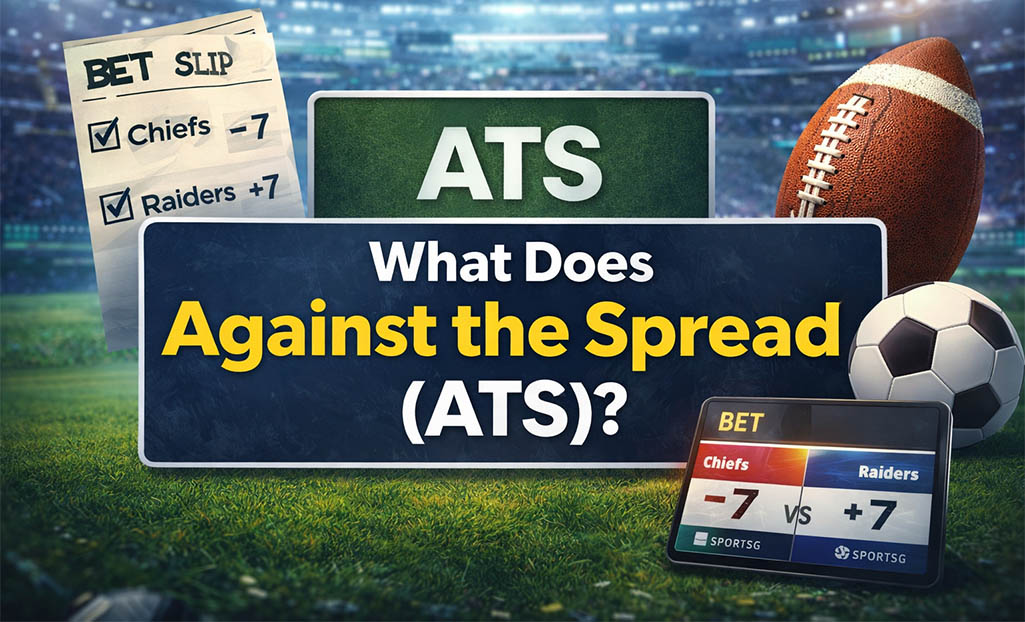
If you’ve ever looked at a sports betting line and seen something like -7 or +7, you’ve already come across one of the most important ideas in betting: Against the Spread (ATS).
At first glance, it can feel a bit confusing. You might think it’s just about picking the team that wins… but it’s not quite that simple.
Once you get this, everything starts to make a lot more sense.
This guide is based on real betting scenarios and industry-standard sportsbook lines.
What Does "Against the Spread (ATS)" Mean?
Let’s keep it simple.
So instead of asking:
"Who’s going to win the game?"
You’re looking at:
"Will this team meet or beat the expectation set by the spread?"
That small shift changes how you see every game.
How the Point Spread Works
To understand ATS, you first need to understand the point spread.
Think of the spread as a way to make both teams feel evenly matched.
Example:
- Chiefs -7
- Raiders +7
Here’s what that means in real terms:
- Chiefs (-7)
They need to win by more than 7 points
- Raiders (+7)
They can:
Win the game
Or lose by less than 7 points
What Does "Covering the Spread" Mean?
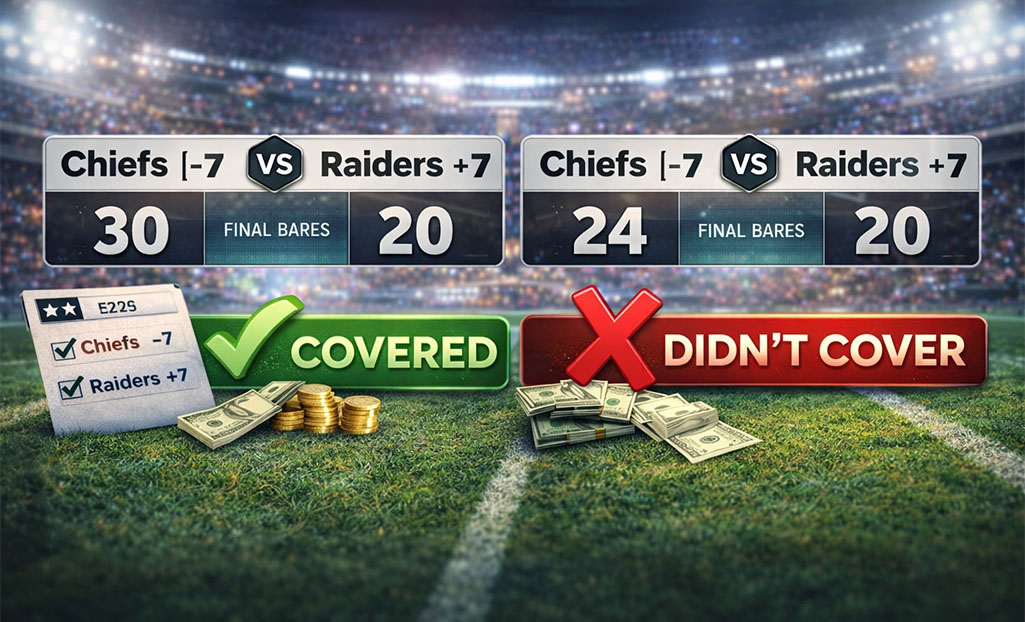
Example of covering the spread: one result covers the ATS line, while the other doesn’t despite winning the game
Let’s walk through it together 👇
Example 1:
Chiefs (-7) vs Raiders (+7)
Final score: Chiefs 30 – Raiders 20
- Chiefs win by 10 → they covered the spread
- Raiders lose by 10 → they didn’t cover
Example 2:
Final score: Chiefs 24 – Raiders 20
- Chiefs win by 4 → they didn’t cover
- Raiders lose by 4 → they covered
This is usually where everything starts to click.
What Is an ATS Record?
You’ll often see something like:
- Cowboys: 10–6 ATS
- Chiefs: 8–8 ATS
This is called an ATS record.
It simply shows how often a team has covered the spread — not how many games they’ve won.
Why This Matters
A team can win a lot of games and still not perform well ATS.
Why?
Because expectations are already high, and the spreads reflect that.
Why ATS Changes How You See Betting
Here’s the interesting part.
When you look at games through ATS, you’re not just thinking about who’s better — you’re thinking about what’s expected.
Sometimes:
- Strong teams come with high spreads
- Other teams offer more room to outperform expectations
That’s where things get interesting.
How to Think About ATS (Simple Approach)
If you’re looking at a game, here’s a simple way to break it down:
1️⃣ Look at the spread
2️⃣ Ask yourself:
"Does this number feel too high or too low?"
3️⃣ Consider what might affect the game:
Recent performances
Injuries
Matchups
4️⃣ Focus on how the game might play out, not just who wins
Common Mistakes to Avoid
These are pretty common, so it’s worth keeping them in mind:
Assuming the better team is always the right pick
A strong team might look like the obvious choice, but the spread already reflects that. That means you’re often paying a “premium” for backing them.
Ignoring how teams perform ATS
A team can win games consistently and still not cover the spread. What matters here isn’t just winning — it’s how they perform compared to expectations.
Mixing up winning with covering
This is a big one. A team can win the game and still not cover the spread, which means the bet loses. They’re related, but not the same thing.
Example You Can Test Yourself
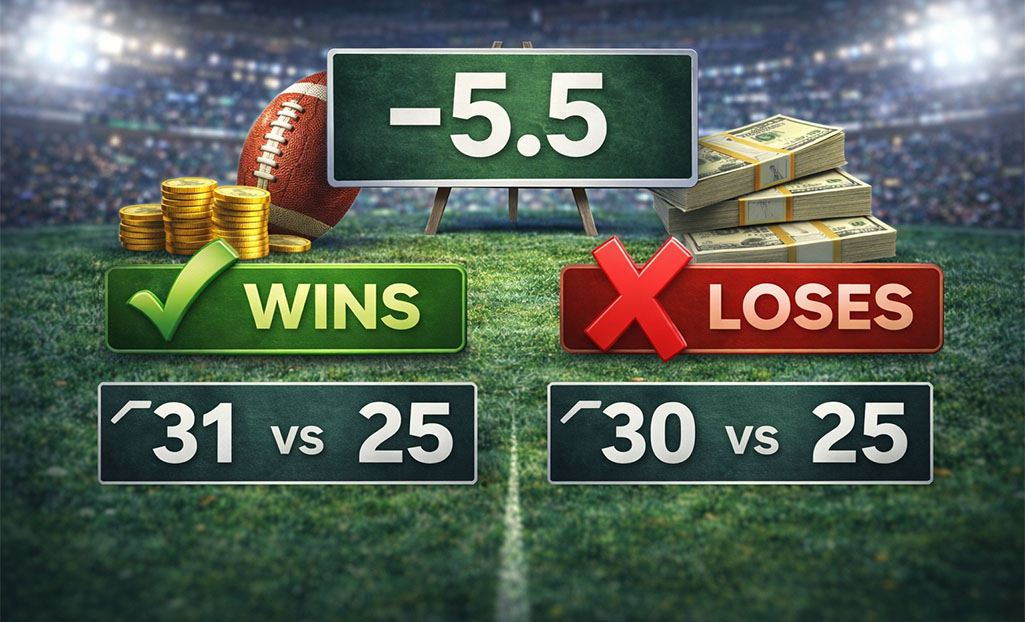
This example shows how a half-point spread (-5.5) can determine whether a bet wins or loses
Let’s say:
A team is -5.5
Now think about this:
- If they win by 6 → the bet wins
- If they win by 5 → the bet loses
That half-point makes all the difference.
Here’s a quick way to see the difference side by side:
ATS vs Moneyline (Quick Comparison)
| Bet Type | What You’re Betting On |
|---|---|
| ATS | Performance vs expectations |
| Moneyline | Who wins the game |
As you can see, once you start looking at games through the lens of expectations, everything feels a bit more intentional — almost like you’re reading between the lines instead of just following the obvious pick.
Instead of going with what "looks right," you begin to notice where things might not be as clear as they seem… and that’s where better decisions usually come from.
So next time you check a spread, don’t just ask who’s going to win — ask yourself:
What is this line really trying to tell me?