Future Bets: Long‑Term Wagers and How They’re Settled

Let’s say it’s Week 1 of the NFL season. You’re feeling confident. Your team looks sharp. So you throw $100 on them to win the Super Bowl at +900. Sounds exciting, right?
Now fast forward four months.
They actually make it to the playoffs… maybe even the final. But here’s the question nobody really explains clearly:
When exactly does that bet get settled?
And what happens if the season gets shortened, a player gets injured, or there’s some weird tie scenario?
I’ve seen people confused about why their bet hasn’t been paid yet… or why it was graded a certain way. So in this guide, I’m going to walk you through exactly how Long-Term Wagers work, when futures bets are settled, and what you should always check before locking your money in for months.
Let’s make this simple — and clear — so there are no surprises later.
What Exactly Are Long-Term Wagers?
Long-Term Wagers are bets placed on outcomes that won’t be decided immediately. Instead of betting on a single game, you’re betting on how a season, tournament, or award race will finish.
Common examples include:
- Super Bowl or NBA Championship winners
- World Series champions
- League MVP or Player of the Year
- Season win totals (Over/Under)
- Division winners
Futures vs Regular Bets: Key Differences
To really understand how Long-Term Wagers work, it helps to compare them to regular game bets. The differences are simple — but important.
| Feature | Long-Term Wagers (Futures) | Regular Bets |
|---|---|---|
| Duration | Weeks or months | Minutes or hours |
| Liquidity | Money locked until settlement | Paid shortly after the game |
| Risk Exposure | Long-term uncertainty | Short-term outcome |
| Payout Timing | After official season/event confirmation | After final whistle |
When Are Futures Bets Actually Settled?
This is the core of it.
A Long-Term Wager is settled only after the event is officially completed and confirmed by the league or governing body.
- Not when the media calls it.
- Not when it feels obvious.
- Not when your team clinches a playoff spot.
Settlement happens when the result is final and official.
Here’s how that usually plays out:
- Championship bets - settled after the final game ends.
- Season win totals - settled after the regular season concludes.
- Award markets (MVP, Rookie of the Year, etc.) - settled after the official announcement.
Until that moment, the bet remains open.
How Long-Term Wagers Are Graded
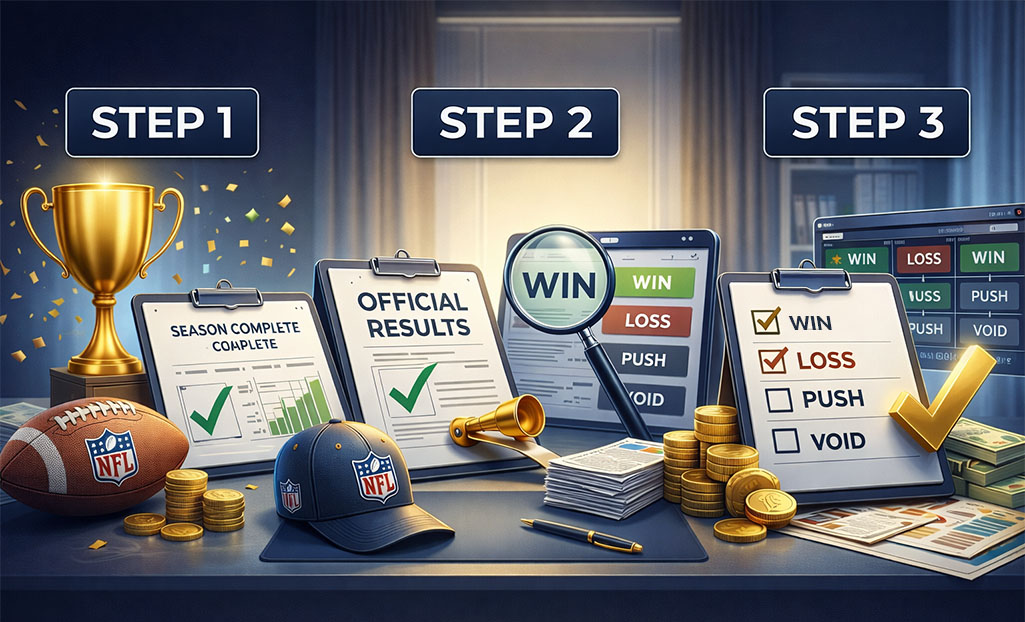
How sportsbooks grade long-term wagers, from event completion to official confirmation and final settlement
Let’s break down what sportsbooks actually do behind the scenes.
Step 1: Event Completion
The season or tournament must finish under official league rules. If something unusual happens — like a shortened season — sportsbooks refer to their house rules.
This is why reading the rules section matters more with futures than with regular bets.
Step 2: Official Confirmation
Sportsbooks wait for confirmed results from the league. If there’s a review, appeal, or delay in official standings, settlement can also be delayed.
Until the result is officially confirmed by the league, the sportsbook will not grade the bet.
Step 3: Bet Grading
Your wager will be marked as one of the following:
- Win – Your selection achieved the outcome.
- Loss – It didn’t.
- Push – Your stake is refunded (common in exact win totals).
- Void – The bet is canceled under specific conditions.
And yes, those last two are where things can get interesting.
Special Settlement Scenarios You Should Understand
This is where confusion usually starts.
What If a Season Is Shortened?
If a season doesn’t complete the expected number of games, sportsbooks may:
- Void all related futures
- Require a minimum number of games to be played
- Adjust settlement rules based on pre-listed conditions
What Happens With Win Totals?
Win totals are season-long bets where you’re predicting how many games a team will win during the regular season.
Here’s how it works:
- If the team finishes with 10 wins, your bet wins.
- If they finish with 8 wins, your bet loses.
- If the line was exactly 9 and the team finishes with exactly 9 wins, the bet is graded as a push and your stake is refunded.
What About Injuries or Trades?
Most Long-Term Wagers are considered "all action" bets.
That means if you bet on a player to win MVP and they get injured mid-season, your bet still stands.
Injuries, roster changes, and unexpected slumps are part of the risk when you lock in a futures ticket.
Why Settlement Timing Matters
One thing people don’t always think about is cash flow.
When you place a Long-Term Wager, that money is tied up until the event is graded. That could mean months without access to those funds.
That’s not necessarily bad — futures can offer strong value and bigger payouts — but it’s something to plan for.
If you’re stacking multiple futures, you don’t want your entire bankroll locked up until February.
Quick Practical Example
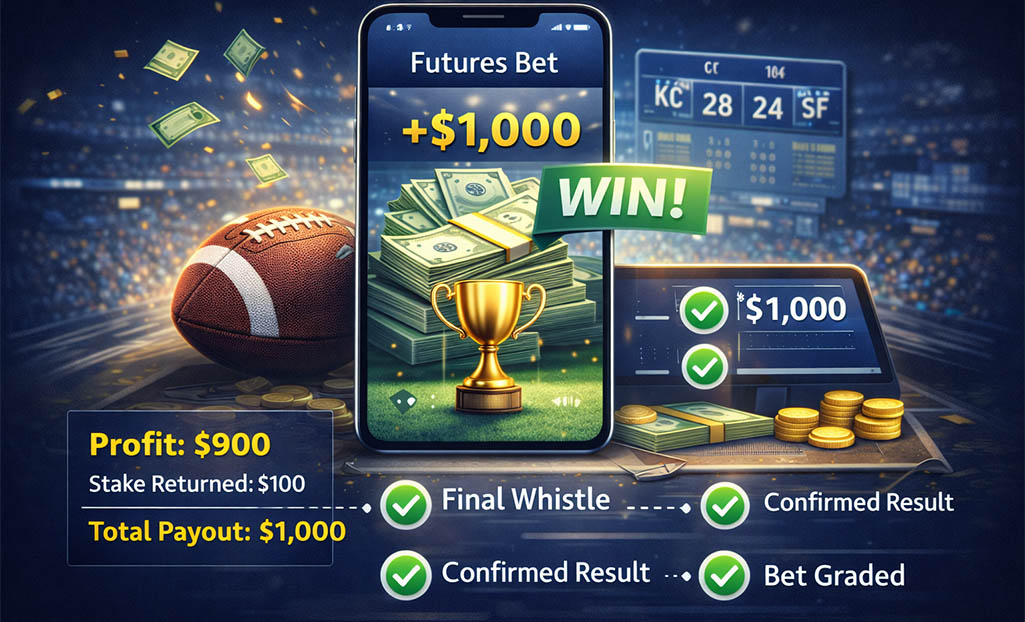
Example of how a futures bet payout works, including profit, stake returned, and final settlement process
Let’s go back to that $100 Super Bowl bet at +900.
If your team wins:
- Profit: $900
- Stake returned: $100
- Total payout: $1,000
But that payout doesn’t hit your account until:
- The final whistle blows.
- The result is official.
- The sportsbook grades the market.
That’s the full settlement chain.
Conclusion
As you can see, the real advantage with these bets is not just finding good odds — it’s understanding exactly how settlement works.
Before placing a long-term wager, make sure you’re clear on:
- When the market is officially settled
- What conditions could void or push the bet
- Whether minimum games or participation rules apply
- How long your money will be tied up
A futures bet shouldn’t feel like a lottery ticket you forget about. It should feel intentional and calculated.
Next time you lock one in, will you just chase the payout — or will you fully understand the rules behind it?