Over Under Betting: How Totals Work and Read Lines
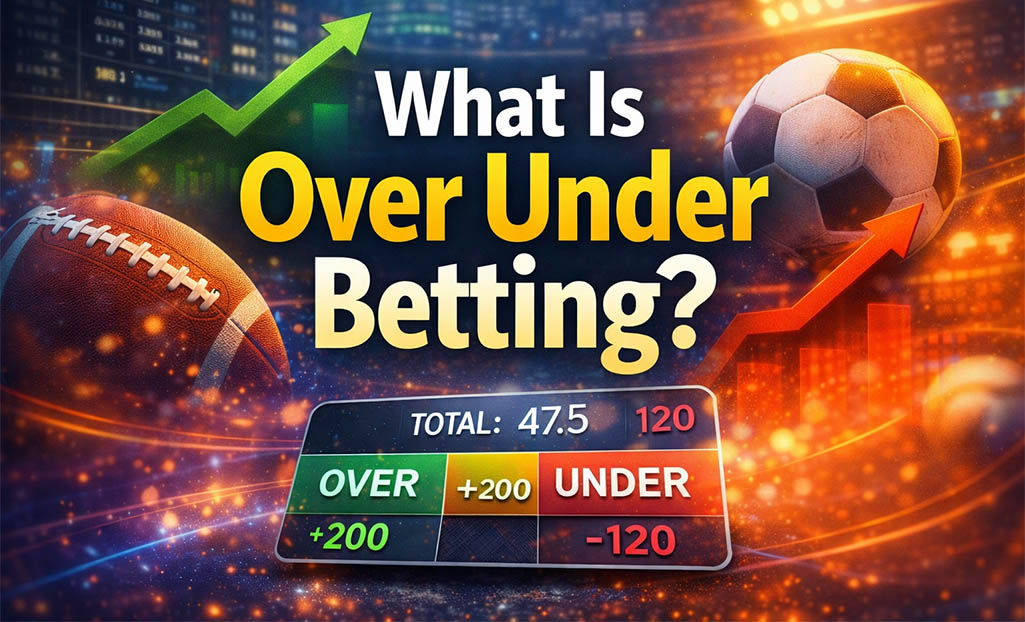
Forget picking winners for a second.
Sometimes the more interesting question is:
how many points are actually going to be scored in this game?
Stick around and you’ll see exactly how totals are set, how to read the line, and how to spot what that number is really telling you before the game even starts.
What Totals Mean in Betting
When you see a number like 48.5 or 214.5, that’s not just a random figure — it’s the sportsbook’s estimate of how many total points will be scored in a game, combining both teams.
Think of it as a predicted final score range.
For example:
- If the total is 48.5, the expectation is that the game lands around 48 or 49 points
- Not exact, but close enough to create a line
What makes this interesting is that you're not predicting a specific score — you're reacting to that expectation.
In other words:
You’re asking yourself if the game will be more open and high-scoring, or slower and lower-scoring than what the line suggests.
Over vs Under: What Each Option Really Means
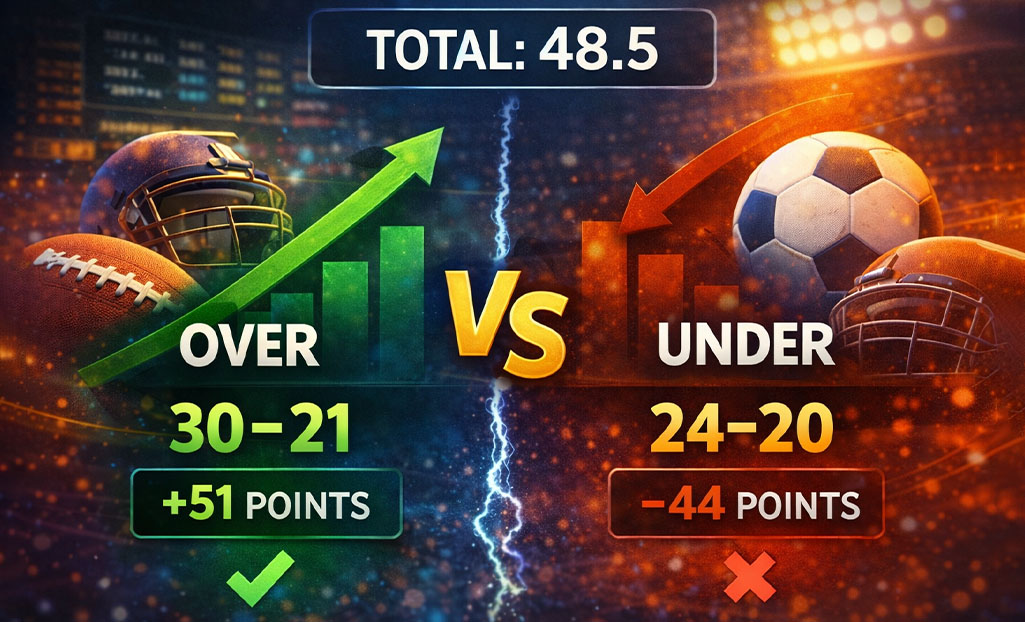
Example of over under betting showing how the total line determines whether the result goes over or under
Once you understand the total, everything becomes very straightforward.
You always have two options:
- Over → the game finishes with more points than the line
- Under → the game finishes with fewer points
Let’s make it real:
Total: 48.5
- Final score = 30–21 → total = 51 → Over wins
- Final score = 24–20 → total = 44 → Under wins
That’s all there is to it.
- You don’t need to predict the exact score
- You don’t care who wins the game
You’re just comparing the actual result vs the expected total
How to Read the Line Without Getting Lost
At first, betting lines might look like numbers without context — but totals are actually very logical once you break them down.
Take this example:
Lakers vs Suns — Total: 229.5
- If the combined score hits 230 or more → Over wins
- If it stays at 229 or below → Under wins
Now, about that .5:
It’s there to eliminate ties. Without it, you could land exactly on the number and neither side wins — that’s called a push.
So when you see:
- 229.5 → always a clear result
- 230 → possible refund if it lands exactly there
Once you understand this, reading totals becomes almost automatic.
What That Number Is Really Telling You
That total isn’t just based on past scores — it’s built from a mix of data and expectations about how the game will play out.
Sportsbooks consider:
- How efficient each team is offensively
- How strong they are defensively
- The pace or rhythm of the game
- Specific matchups between players or styles
So the total is basically saying:
Given everything we know, this is how we expect the game to flow.
But there’s more — the line also adjusts based on how people are betting.
Why Totals Change Before a Game Starts
You might check a game in the morning and see one number… and then a different one later.
Example:
- Opens at 46.5
- Moves to 48.5
This usually means more bets are coming in on the Over, so the sportsbook raises the line to balance things out.
For you, this matters because:
- Early lines can offer value
- Late movement can reveal where money is going
Sometimes the best insight isn’t the number itself — it’s how it changes.
How to Read Between the Lines in Real Situations

Example of over under betting analysis using game context and totals
Let’s walk through how you might actually think about a total:
- Team A averages 112 points
- Team B averages 110 points
That suggests something around 220
But the line is:
214.5
Now you stop and think.
Why lower?
Possible reasons:
- Slower pace expected
- Strong defensive matchup
- One key scorer missing
- Scheduling factors (fatigue, travel)
How to Approach Over vs Under in Different Scenarios
Instead of relying on instinct, it helps to connect the line with how the game is likely to unfold.
When games tend to go higher:
- Teams play fast and take more shots
- Offenses are efficient and aggressive
- Defenses allow a lot of scoring
When games tend to go lower:
- Slower tempo and fewer possessions
- Defensive-focused matchups
- Conditions that limit scoring (weather, fatigue, etc.)
Common Mistakes That Can Throw You Off
A lot of mistakes come from skipping context.
Some of the most common:
- Seeing a high number and assuming it will go higher
- Ignoring injuries or lineup changes
- Not checking if the line has already moved
- Treating all games the same
The total already includes a lot of information —your job is to question it, not blindly follow it.
A Simple Way to Think About Totals
Here’s a simple way to reframe it:
Instead of asking:
Do I think this goes over?
Ask:
Does this number feel high or low based on how this game will play?
Try This Yourself with a Simple Exercise
Next time you look at a game:
- Estimate each team’s score
- Add them together
- Compare it to the total
This helps you:
- Understand the line better
- Build your own expectations
- Spot differences between your view and the sportsbook
As you can see, that total isn’t just a number — it’s a point of view on how the game might unfold.
Take a moment to read it, question it, and decide if you see it the same way.