Point Spread: How Bookmakers Set the Line
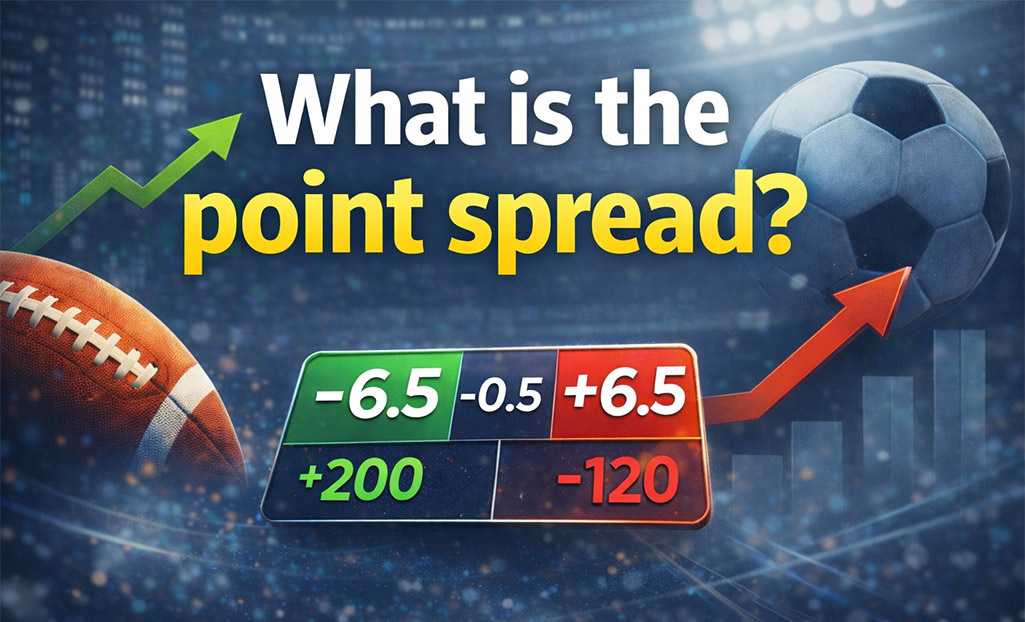
If you’ve ever looked at a betting line and seen something like -6.5 or +6.5, that’s the point spread.
Instead of just asking "who will win?", the real question becomes:
- By how much will they win?
- Or how close will the game be?
So where does that number come from, and what makes it move? Let’s take a closer look.
Quick Example (So It Clicks Instantly)
Let’s say you see this line:
- Chiefs -6.5
- Jets +6.5
What this means:
- If you pick the Chiefs (-6.5) → they need to win by 7 or more points
- If you pick the Jets (+6.5) → they can:
- Win the game
- Or lose by 6 points or less
Why the Point Spread Exists
A lot of people assume sportsbooks are trying to predict the exact outcome of a game.
- Not exactly.
Their main goal is to:
- Encourage action on both sides
- Reduce risk
- Make money through the built-in margin (the odds)
How Bookmakers Set the Point Spread
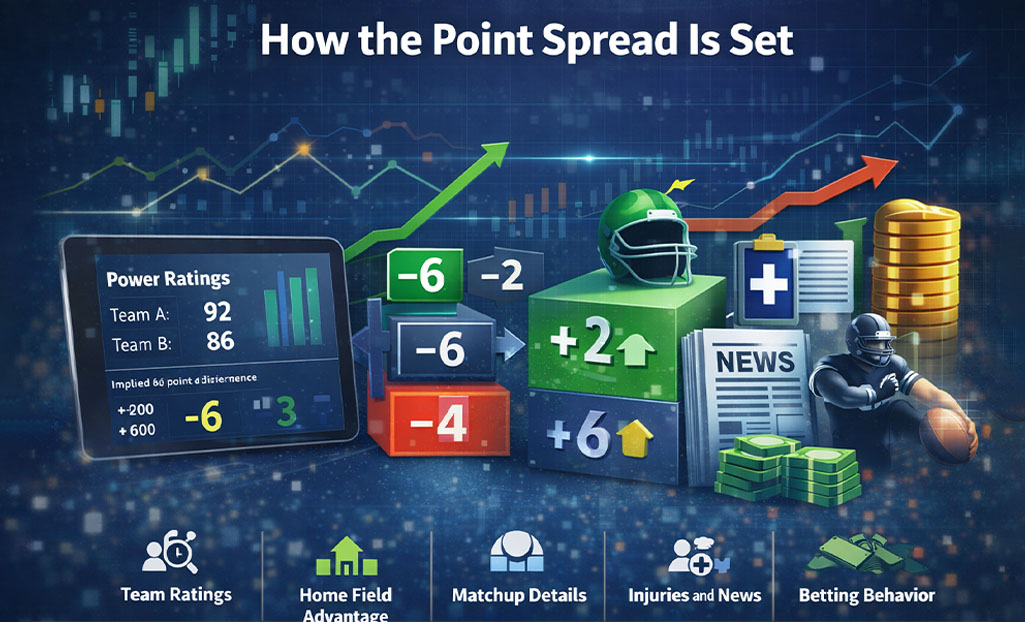
Example of how sportsbooks set the point spread using team ratings, matchups, and betting activity
The number you see isn’t random—it’s built using a mix of data, experience, and market behavior.
Here’s what goes into it:
1. Team Ratings (Power Ratings)
Each team is assigned a numerical value based on overall strength.
- Team A: 92
- Team B: 86
That difference (6 points) helps form the foundation of the spread.
2. Home Field Advantage
Playing at home matters.
In many sports, this adds roughly:
- 2 to 3 points to the home team
So a neutral spread of -4 could become -6 if the stronger team is at home.
3. Matchup Details
Not all teams match up the same way.
Bookmakers look at:
- Offensive vs defensive styles
- Pace of play
- Key player matchups
Sometimes a weaker team can still be a tough matchup.
4. Injuries and News
This can shift things quickly.
- A star player ruled out
- A last-minute lineup change
- Weather conditions (especially in football)
All of these can impact the spread before and after it opens.
5. Betting Behavior
This is a big one.
Once the line is released, bettors start placing wagers. If too much money goes to one side, the sportsbook adjusts.
- Heavy bets on one team → line moves
- Goal → attract bets on the other side
So the spread is not just about teams—it’s also about people.
Why the Line Moves
You might notice that the spread changes between when it opens and game time.
Example:
- Opening line: Lakers -4
- Later: Lakers -3
That shift tells a story.
Usually:
- More money is coming in on the underdog
- The sportsbook adjusts to stay balanced
This movement is one of the most useful signals you can pay attention to.
How It Plays Out in Real Life?
Let’s break it down step by step.
Opening spread: Suns -5
What happens next:
- Early bets favor the Suns
- Then larger bets come in on the Warriors
- Line moves to Suns -4
What this suggests:
- Initial public interest leaned Suns
- More informed money likely came in on the Warriors
This kind of shift can give you insight into how the market sees the game.
How to Read the Odds Next to the Spread
You’ll often see something like this:
- Suns -5 (-110)
- Warriors +5 (-110)
That -110 means:
- You risk $110 to win $100
Things That Can Trip You Up
There are a few details that are easy to overlook but make a big difference.
- Winning the game doesn’t always mean winning the bet
- A small line movement can signal something important
- Popular teams often attract more bets, which can affect the spread
Sometimes the line looks obvious—and that’s exactly when it’s worth slowing down and taking a second look.
When a Line Feels Too Obvious
This happens more often than you’d think.
You look at a game and think:
"This feels like an easy pick."
That’s usually a good moment to ask:
- Why is the line set this way?
- What might I be missing?
Sportsbooks put a lot of work into setting these numbers, so if something looks too easy, there’s usually a reason behind it.
A Simple Way to Check Yourself
Before making any decision, it helps to run through a quick mental checklist:
- What does the spread actually require to happen?
- Has the line moved since it opened?
- Is this number influenced by public perception?
Even taking a few seconds to think through these can change how you see a game.
Conclusion
The point spread is more than just a number next to a team.
It’s a reflection of:
- Team strength
- Context around the game
- And how people are betting
Once you understand how it’s built and how it moves, you start seeing games differently. And from there, everything else becomes a lot easier to interpret.