What Is a Betting Exchange? Lay Bets & Liability Explained
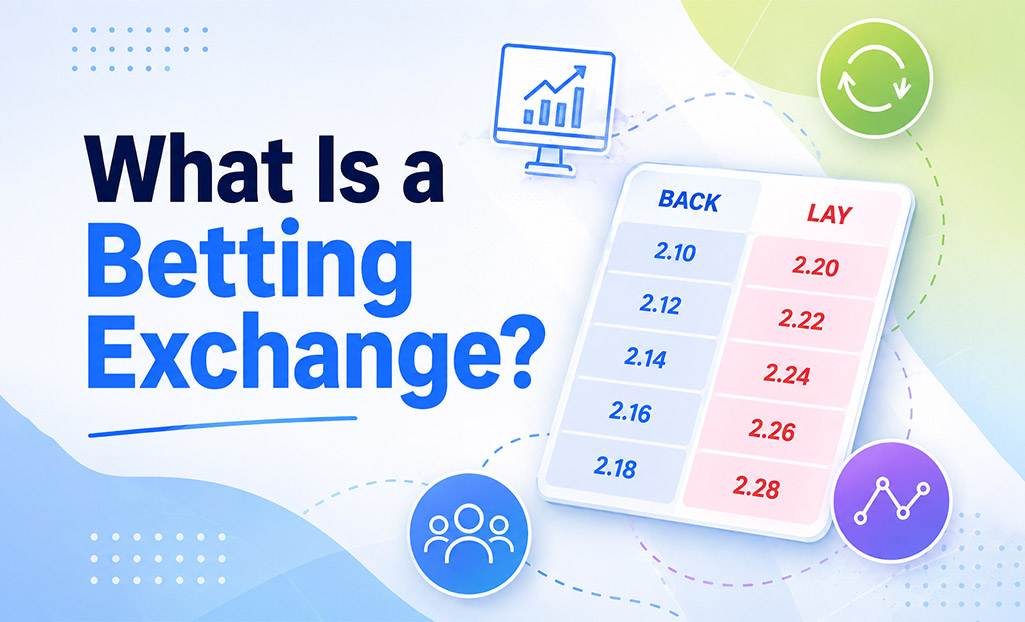
Odds move constantly, people lay teams instead of backing them, and suddenly liability matters more than the stake itself.
At first glance, the whole thing looks far more complicated than regular betting.
But once you understand the simple idea behind back bets, lay bets, and liability, everything starts making a lot more sense — including why betting exchanges became such a huge part of matched betting in the UK.
What Is a Betting Exchange?
A betting exchange is a platform where users bet against each other rather than against a bookmaker.
That’s the biggest difference.
With a normal sportsbook:
- The Bookmaker Sets The Odds
- Takes Your Bet
- Pays Winnings If Your Prediction Is Correct
A betting exchange works differently.
Instead of the bookmaker creating the market, users create the odds themselves. One person backs an outcome to happen, while another person lays that same outcome and bets against it happening.
The exchange simply matches both sides together and takes a small commission from winning bets.
Betfair Exchange is probably the best-known example in the UK, although there are several other exchange platforms available too.
One of the reasons betting exchanges became so popular is because they often offer better odds than traditional sportsbooks.
Since users compete against each other instead of betting directly against a bookmaker, prices can sometimes be more favourable.
Back Bets vs Lay Bets
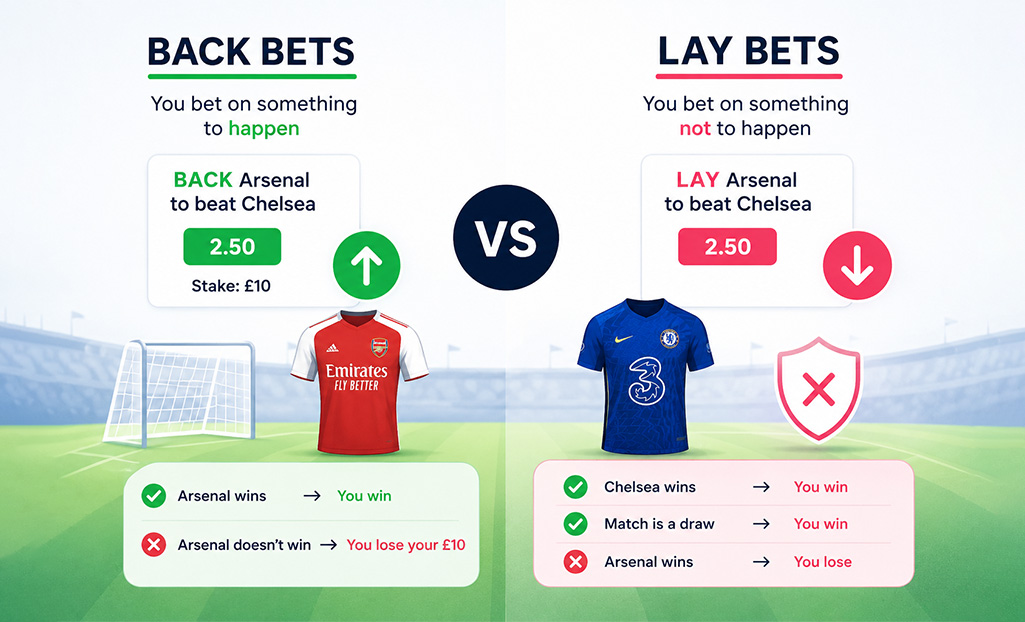
Back vs lay betting example
This is usually the part where people stop for a second and think:
"Wait… how do you bet against a team winning?"
And honestly, that reaction is completely normal at first.
A back bet works exactly like a standard sportsbook bet.
For example:
- Back Arsenal To Beat Chelsea
- Odds: 2.50
- Stake: £10
If Arsenal wins, your bet wins.
If Arsenal doesn’t win, you lose your £10 stake.
Simple enough.
A lay bet flips the idea around.
Instead of betting on Arsenal to win, you’re betting on Arsenal NOT to win.
That means your lay bet wins if:
- Chelsea Wins
- The Match Ends In A Draw
You only lose if Arsenal actually wins the match.
This is why lay betting often feels backwards initially. You’re basically acting like the bookmaker rather than betting like a normal customer.
Why Betting Exchanges Feel Different
One thing that makes betting exchanges interesting is the amount of control they give users.
You’re not just accepting bookmaker odds anymore.
You can:
- Choose Your Own Prices
- React To Changing Odds
- Trade Positions During Events
- Reduce Losses Before A Match Finishes
That flexibility is one of the biggest reasons betting exchanges became heavily linked with strategies like matched betting and sports trading in the UK.
What Does Liability Mean?
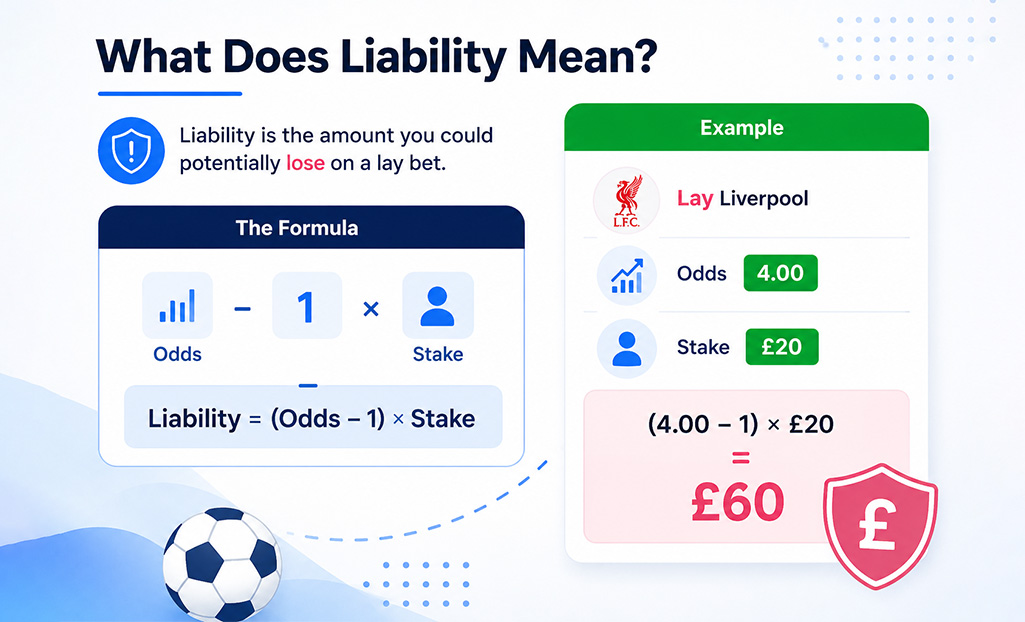
How liability works in betting exchanges
Liability is probably the most important betting exchange term to understand properly.
When placing a lay bet, liability represents the amount of money you could potentially lose.
With a normal back bet, your maximum loss is usually your stake.
But lay betting works differently because you’re covering someone else’s potential winnings.
That’s why liability can sometimes be much higher than the amount you’re trying to win.
The formula is:
- Liability = (Odds − 1) × Stake
Let’s look at a real example.
Imagine you lay Liverpool at odds of 4.00 with a £20 stake.
Your liability would be:
- (4.00 − 1) × £20
- Liability = £60
So your outcomes would look like this:
| Result | Outcome |
|---|---|
| Liverpool wins | You lose £60 |
| Liverpool doesn’t win | You win £20 |
This is the point where many people suddenly realise why liability matters so much.
The potential profit may look small, but the actual risk behind the lay bet can be significantly higher depending on the odds.
A Simple Betting Exchange Example
Let’s say there’s a Premier League match between Manchester United and Tottenham.
You think Manchester United won’t win the game.
Instead of backing Tottenham directly, you decide to lay Manchester United on a betting exchange.
Your bet:
- Lay Manchester United
- Odds: 3.00
- Stake: £15
Possible outcomes:
| Match Result | Outcome |
|---|---|
| Manchester United wins | You lose £30 |
| Draw | You win £15 |
| Tottenham wins | You win £15 |
Why Betting Exchanges Matter in Matched Betting
Betting exchanges play a huge role in matched betting because lay bets help cover multiple outcomes at the same time.
A common matched betting setup might look like this:
- Place A Promotional Free Bet With A Sportsbook
- Lay The Same Outcome On A Betting Exchange
- Balance The Risk Across Both Platforms
Are Betting Exchanges Legal in the UK?
Yes — betting exchanges are fully legal in the UK as long as the platform is licensed by the UK Gambling Commission (UKGC).
Platforms like Betfair Exchange must follow strict rules related to:
- Fair Betting
- Responsible Gambling
- Account Protection
- Payment Security
Before using any exchange, it’s always worth checking whether the operator holds a valid UK licence.
Common Mistakes People Make
One of the biggest mistakes is ignoring liability completely.
A potential £20 profit can look appealing, but if the liability is £100 or more, the actual risk changes dramatically.
Another common issue is confusing lay betting with simply backing the opposite team. While they can feel similar, lay bets cover multiple outcomes at once.
And finally, many people forget betting exchanges charge commission on winnings, which slightly reduces overall profit.
Conclusion
As you’ve probably realised by now, betting exchanges work very differently from traditional sportsbooks — but that’s exactly what makes them so interesting.
So if you had the choice, would you stick with regular sportsbooks or try a betting exchange instead?