What Is RTP in Casino Games and How Does It Work?

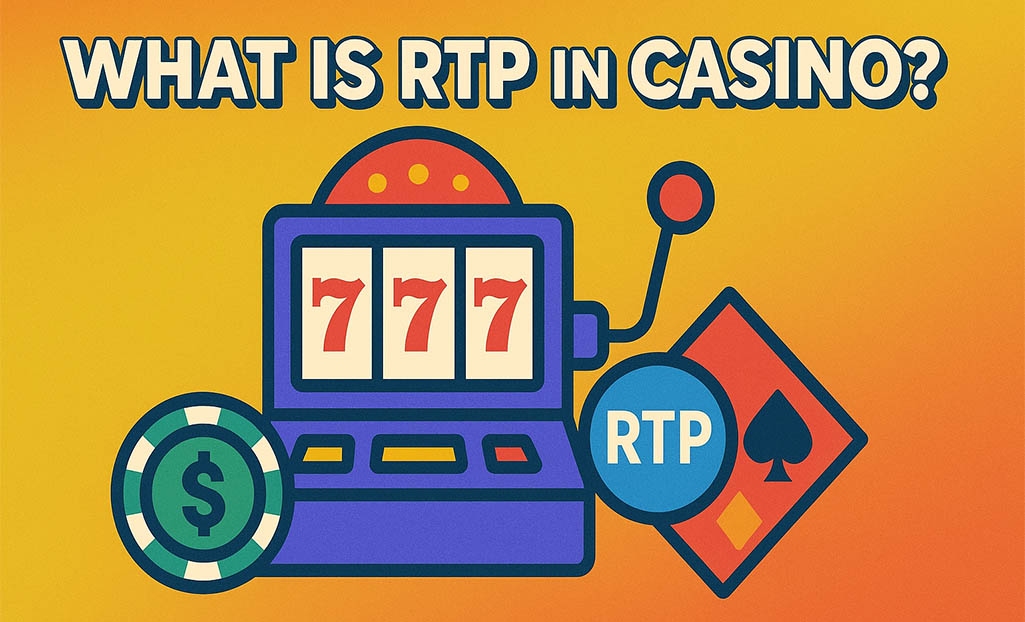
Ever wondered why some players seem luckier than others in casinos? The answer isn’t always about luck — it often comes down to understanding the well-known RTP, or Return to Player, a kind of “secret code” that many overlook but the smartest players truly grasp.
It’s not just about math or percentages; it’s about knowing how your bets turn into potential returns. If you want to play smarter, boost your outcomes, and make more strategic decisions, keep reading — this is something you’ll definitely want to know.
What Does RTP Really Mean?
RTP stands for Return to Player, which refers to the percentage of all money wagered on a game that is paid back to players over time. Think of it as a mathematical average showing how fair a game can be toward the player.
For instance, if a game has an RTP of 96%, it means that for every $100 collectively bet by all players, the game returns $96 in winnings on average. However, that doesn’t mean you’ll personally recover that exact amount — every gaming session is entirely random.
How RTP Works Behind the Scenes
RTP isn’t calculated based on just a few rounds. Casinos determine it after analyzing thousands, sometimes millions, of spins or plays. It’s a long-term statistical value. Each spin is independent, thanks to random number generators (RNGs) that ensure fair and unpredictable results.
In other words, a high RTP can improve your odds in the long run, but it doesn’t promise instant wins. Every session is unique, and luck still calls the shots — there’s no magic formula that guarantees a specific outcome.
What Counts as a Good RTP
Generally speaking, an RTP of 96% or higher is considered excellent in the casino world. Online slots usually range from 94% to 98%, while physical machines tend to have slightly lower percentages.
The higher the RTP, the more balanced your long-term chances of winning become. Still, don’t base your strategy solely on that figure — other factors, like volatility (how frequently and how big the wins are) and bonus features, can also affect your results.
Where to Find a Game’s RTP
In regulated online casinos, the RTP (Return to Player) is typically displayed in the game’s description, alongside the rules or paytable. In brick-and-mortar casinos, availability depends on the country — in some places, it’s public, while in others, only the operator knows it.
In the United States, states such as New Jersey, Pennsylvania, and Michigan have laws requiring transparency and third-party audits for RTP values. This ensures players can access verified information about win probabilities and the statistical behavior of each game.