What You Need to Know About Sports Betting

Sports betting means wagering money on outcomes you believe will happen in a sporting event. When your prediction is right, you win based on the odds. It’s a way to experience sports with added excitement, as long as it’s done sensibly and responsibly.
Did you know that sports betting moves billions of dollars every year and blends excitement, strategy, and luck? This global phenomenon connects millions of fans who want to feel sports more intensely, though it also comes with risks and strict regulations.
More and more people wonder what sports betting really is, how it works, why it’s so appealing, and what its social or legal implications are. This educational guide will help you understand the world of sports betting with clarity, curiosity, and a sense of responsibility.
Definition of sports betting
Sports betting is about predicting the result of a sporting event and placing money based on that forecast. Simply put, you pick an outcome—such as who will win a game—and if you’re right, you receive a payout determined by the odds.
It works quite straightforwardly. You choose a sportsbook, select an event, and decide how much to wager. The odds represent how likely something is to happen, and betting platforms adjust these values to balance risk and ensure a fair and entertaining experience for users.
Main Types of Sports Bets


Types of Sports Bets
There are different kinds of sports betting options designed to match each bettor’s style and level of expertise. From simple to complex wagers, each type offers a unique way to enjoy sports with emotion, strategy, and a little bit of luck.
Moneyline Bets
The most direct and popular form among bettors. You simply choose the team or player you think will win. If you guess correctly, you’re paid according to the posted odds. This kind of sports betting is perfect for beginners because it mixes simplicity, excitement, and quick results.
Handicap Betting
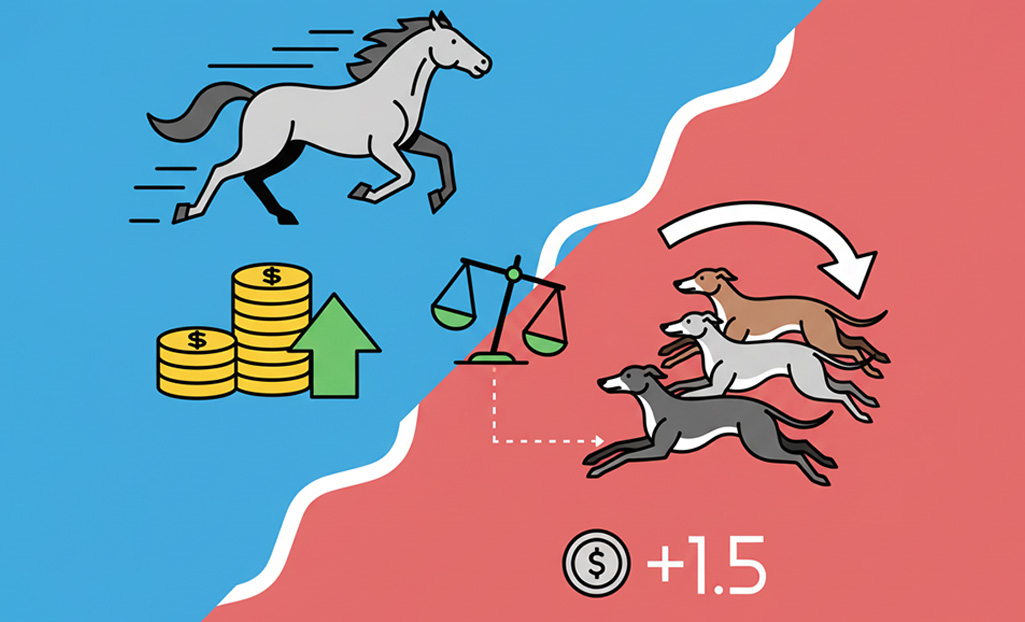
Types of Sports Bets – Handicap Betting
Here, the favorite starts with a fictional disadvantage, while the underdog gains an advantage. This balances the odds and makes games more competitive. It’s ideal for uneven matchups since it allows better potential payouts by adjusting the probabilities.
Over/Under (Totals) Bets
This type focuses on predicting whether the total score in a game will go over or under a number set by the sportsbook. Common in football, basketball, and tennis, these bets emphasize overall performance rather than the match winner.
Parlay (Accumulator) Bets
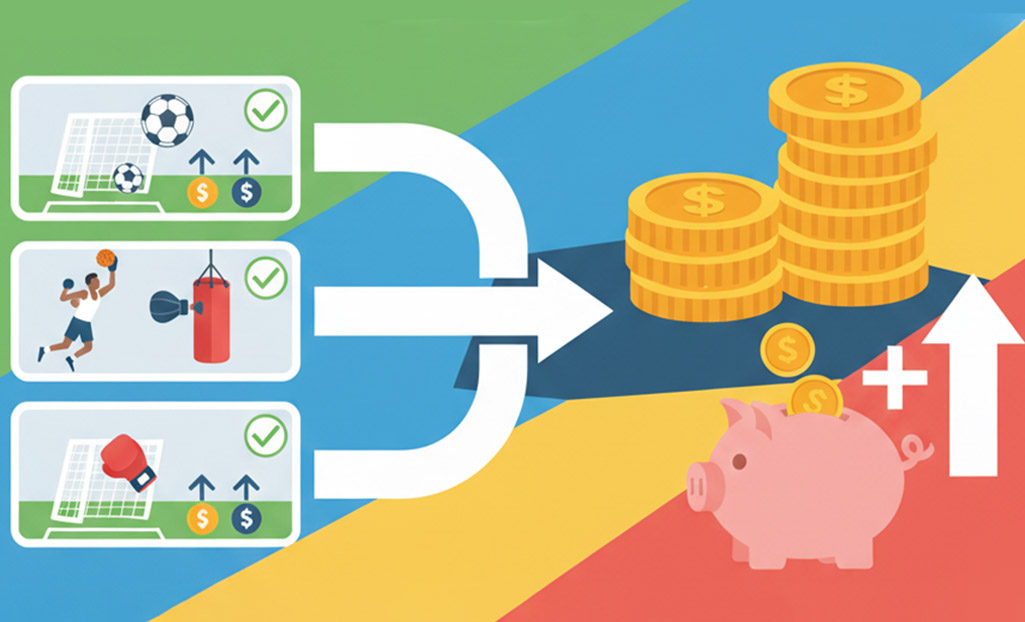
Types of Sports Bets – Parlay
A parlay combines several wagers into a single ticket, and you must win them all to collect. While the risk is higher, so are the potential rewards. It’s a popular form of sports betting among experienced players aiming for bigger wins by linking multiple games or markets.
Proposition or “Prop” Bets
These focus on specific events within a game rather than the final result. For instance, who scores first, how many yellow cards there will be, or the total number of corner kicks. This kind of sports betting adds variety and keeps the excitement going throughout the match.
Understanding the “+” and “–” Signs in Sports Betting
The “+” and “–” symbols show the odds format and level of risk in the American system. A “+” indicates how much profit you could make on a $100 bet, while a “–” shows how much you’d need to wager to win that same amount.
For example, odds of +200 mean you’d win $200 for every $100 wagered. Conversely, odds of –150 mean you must bet $150 to earn $100. This simple method helps you identify both the favorite and the underdog in a game.
Are Sports Bets Legal?
In the United States, sports betting became legal in many states after the Supreme Court’s 2018 decision allowing each state to regulate it individually. Today, more than half the country has specific laws that monitor and control this growing industry.
Elsewhere, the situation varies. Nations such as the United Kingdom, Spain, and Australia have fully regulated sports betting markets overseen by official agencies that ensure transparency, player safety, and responsible gambling measures.
However, some countries still impose restrictions or outright bans. That’s why it’s best to place bets only on licensed and regulated platforms. Betting on illegal sites could expose users to scams, fines, or legal issues.
Can Sports Betting Become Addictive?
Yes, sports betting can turn addictive if not managed carefully. The thrill of risk and the chance of winning can create dependency—especially when people bet to recover losses or escape stress and personal problems.
This definition highlights the seriousness of the issue and why it must be viewed beyond the individual. Easy access to betting and aggressive advertising can fuel compulsion. That’s why education and prevention play a key role in reducing gambling addiction.
Ultimately, betting is far more than following a gut feeling. It’s about analyzing, enjoying, and staying grounded while experiencing the excitement of sports betting in a healthy way. Ready to explore this world with responsibility, fun, and balance?