Self‑Exclusion & GAMSTOP: How Players Stay Protected
Trying to block yourself from one betting site is easy.
Trying to block yourself from dozens of them at the same time? That’s where GAMSTOP comes in.
But what actually happens after you register?
Can betting sites still contact you?
What happens to your remaining balance?
And does GAMSTOP really cover every gambling site in the UK?
If you want to understand how self-exclusion really works in the UK — and what protections players actually get after registering with GAMSTOP — you’re in the right place.
What Is Self-Exclusion?
Self-exclusion is a responsible gambling tool that allows players to block access to gambling services for a chosen period of time.
That means users can usually request account restrictions through a sportsbook, casino site, bingo platform, or betting app without permanently closing the account.
The issue, though, is that excluding yourself from one operator still leaves plenty of other gambling platforms accessible within seconds.
What Is GAMSTOP?
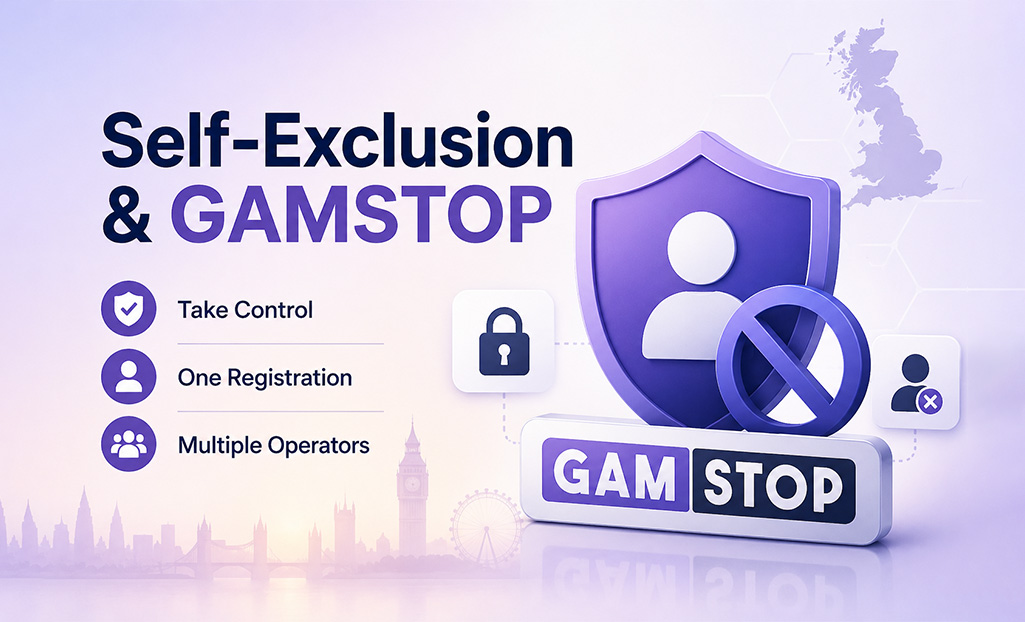
GAMSTOP is a free UK self-exclusion service that works across multiple gambling operators at the same time.
Instead of contacting every betting site individually, players can register once and apply restrictions across participating UK Gambling Commission (UKGC) licensed operators.
Once the exclusion becomes active, users cannot normally:
- Access existing gambling accounts
- Create new accounts
- Deposit money
- Receive gambling marketing from participating operators
And because UKGC-licensed companies are required to participate in the scheme, GAMSTOP now covers a large part of the regulated UK online gambling market.
How GAMSTOP Works
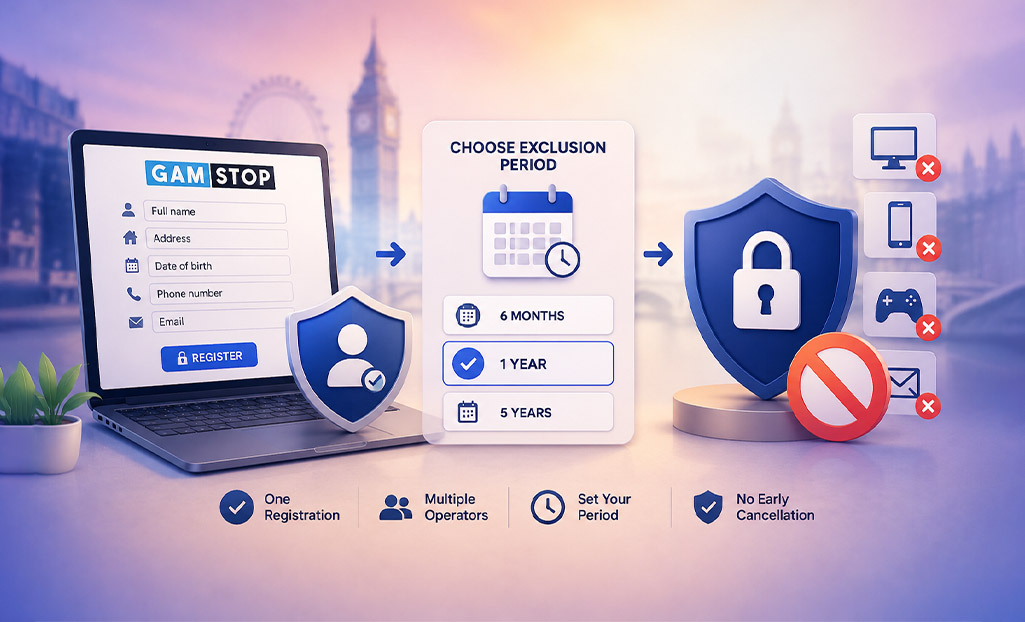
GAMSTOP allows players in the UK to self-exclude from multiple gambling platforms with a single registration.
The registration process itself is fairly simple.
Players usually provide:
- Full name
- Address
- Date of birth
- Phone number
- Email details linked to gambling accounts
After registering, users choose an exclusion period:
- 6 months
- 1 year
- 5 years
Once activated, the restriction cannot usually be cancelled early.
How Multi-Operator Schemes Protect Players
One of the biggest problems with online gambling is how quickly users can move from one betting site to another.
Without a centralised system, self-excluding from one operator may still leave dozens of gambling apps accessible within minutes.
- GAMSTOP helps close that gap.
Instead of relying on players to repeat the process across multiple platforms, the scheme creates a wider protection network across participating UK operators.
In practice, that means players who register with GAMSTOP should not be able to:
- Open new gambling accounts
- Reactivate restricted accounts
- Continue depositing funds
- Keep receiving betting promotions from participating brands
And this is where UK regulation becomes important.
Licensed operators are expected to follow responsible gambling obligations set by the UK Gambling Commission, including providing self-exclusion mechanisms and handling restricted accounts appropriately.
Once the registration becomes active, participating UKGC-licensed gambling sites should automatically apply restrictions linked to that player’s personal details, helping create a wider layer of protection across multiple platforms at once.
What Happens to Existing Balances?
One of the most common questions around self-exclusion is what happens to the money already sitting in betting accounts.
Depending on the platform, this may include:
- Identity verification
- Pending withdrawal processing
- Settlement of open bets before restrictions fully apply
The key point is that self-exclusion does not mean operators can simply keep customer funds.
GAMSTOP vs Operator Self-Exclusion
Although both systems are designed to support responsible gambling, there’s a major difference between them.
| Feature | GAMSTOP | Operator Self-Exclusion |
|---|---|---|
| Covers multiple gambling sites | Yes | No |
| Single registration | Yes | No |
| Applies across participating operators | Yes | Only one brand |
| Managed centrally | Yes | No |
Even outside GAMSTOP, UK gambling companies are still expected to provide their own self-exclusion tools directly on their platforms.
However, operator-level exclusions only apply to that specific brand, while GAMSTOP extends restrictions across multiple participating operators at once.
What GAMSTOP Does NOT Cover
This is another area that often causes confusion.
GAMSTOP mainly applies to UKGC-licensed gambling operators. It does not usually block:
- Offshore betting sites
- Unlicensed casinos
- Gambling platforms operating outside UK regulation
That’s why UK regulators regularly warn players about using unlicensed gambling sites, as consumer protections may be much weaker outside the regulated UK market.
Conclusion
As you can see, GAMSTOP is not just about blocking betting accounts — it’s about creating a stronger layer of protection across the UK gambling market when players need it most.
And with responsible gambling becoming a bigger focus every year, could multi-operator self-exclusion eventually become the global standard?