Understanding Expected Value and Variance for Smarter Bets

If you’ve ever felt like you’re making "good bets" but still not seeing results, you’re not alone. The truth is, winning in sports betting isn’t just about picking winners — it’s about understanding value and variance.
Here’s an easy way to look at it.
What Is Expected Value (And Why It Matters)?
Expected Value (EV) is a way to measure whether a bet is worth it in the long run.
Instead of asking:
Will this bet win?
You start asking:
Is this bet priced correctly?
That small shift changes everything.
How to Calculate Expected Value
Let’s break this down in a practical way so you can actually apply it when looking at real bets.
Step 1: Use the formula
Step 2: Convert odds into probability
To find value, you need to understand what the odds imply.
- +150 → 40% implied probability
- -120 → 54.5% implied probability
👉 This represents the bookmaker’s estimation.
Step 3: Compare with your own estimation
Now you build your own probability based on:
- Stats
- Team performance
- Matchups
Real Betting Example
Let’s say there’s a game:
- Lakers vs Warriors
- Odds for Lakers: +150
- Implied probability: 40%
- Your estimated probability: 50%
- Stake: $100
- Profit if win: $150
Now calculate:
EV = 75 – 50 = +25
👉 Over time, this type of bet would average +$25 per bet
That’s what a value bet looks like.
What "Value" Actually Means
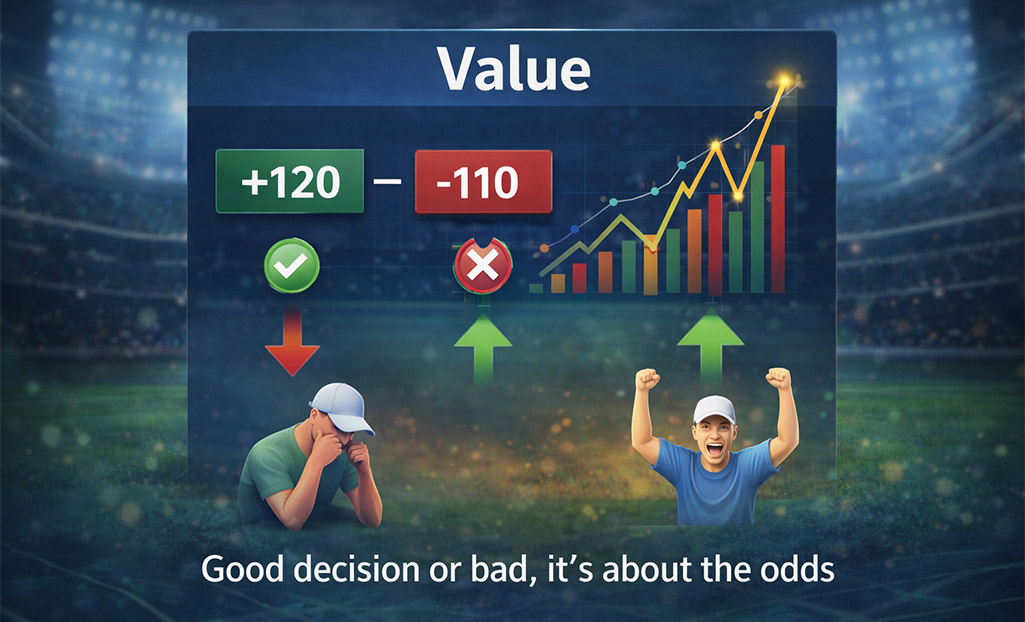
Value means finding odds that are better than they should be — not just picking winners
Value doesn’t mean “this will win.”
It means:
That’s it.
- You can lose and still make a good decision
- You can win and still make a bad one
This is where most people get it wrong.
Now Let’s Talk About Variance
Variance is what makes results feel unpredictable in the short term.
It explains why:
- You can lose several bets in a row
- Or go on a winning streak
- Even when your decisions are solid
Simple Example
Think about flipping a coin.
Even with a 50% chance, you might get:
- 4 losses in a row
- Or 5 wins in a row
That’s variance.
Now apply that to betting — where things are even less predictable.
What Variance Looks Like in Real Betting
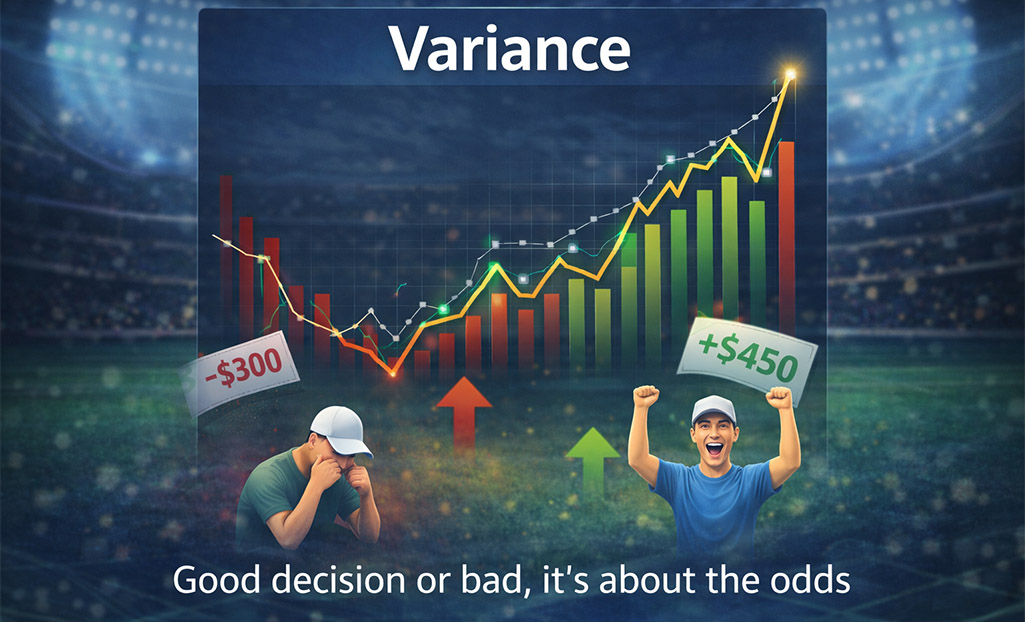
Short-term results can swing up or down — that’s variance, not a mistake
Even if you consistently place good bets:
You can still lose in the short term
And sometimes, those swings can last longer than expected.
That’s normal — not a mistake.
How to Manage Variance (This Is Where It Matters)
Understanding variance is one thing — handling it properly is what actually keeps you in the game.
Keep your bet size consistent
Avoid increasing stakes after losses.
Use small percentages
A common approach: 1–3% of your bankroll per bet
Expect losing streaks
They’re part of the process, not a signal to panic.
Focus on decisions, not outcomes
Judge your bets by logic, not results.
Quick Reference Table
| Situation | What’s Going On | What You Should Think |
|---|---|---|
| Your probability is higher than the odds | The bet is undervalued | ✅ This is a good bet (value) |
| Your probability is lower than the odds | The bet is overpriced | ❌ Better to skip it |
| You lose several bets in a row | Normal short-term swings | 👉 Don’t panic, this is variance |
| You win several bets in a row | Things are going your way (for now) | 👉 Stay disciplined, it’s still variance |
How Value and Variance Work Together
Think of it like this:
- Expected Value → helps you choose the right bets
- Variance → explains why results don’t always match immediately
If you understand both, you stay consistent.
If you don’t, you start chasing results.
Step-by-Step: Putting It All Together
1️⃣ Estimate the real probability
2️⃣ Convert odds into implied probability
3️⃣ Compare both
4️⃣ Identify value
5️⃣ Place the bet
6️⃣ Accept the result (win or lose)
Conclusion
Como verás, this isn’t about finding perfect bets — it’s about making better decisions, consistently.
- You’re not trying to beat every game
- You’re trying to beat the odds over time
- And that only happens when you understand what’s really behind each bet
So next time you see a bet, ask yourself: are you following the crowd… or actually finding value?