What Is a Patent Bet? Breaking Down the Seven‑Bet Wager
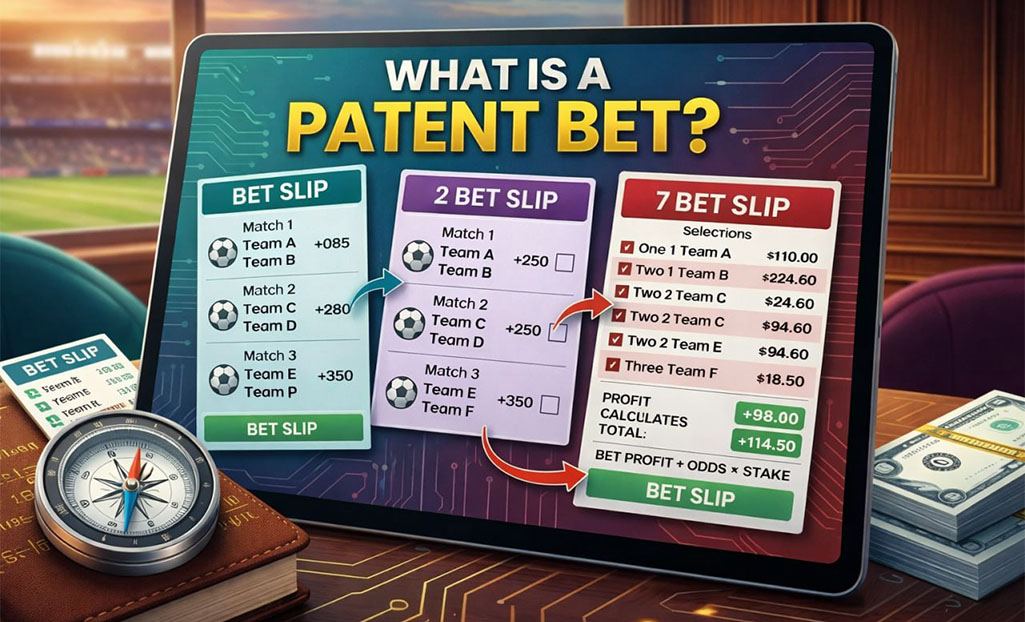
The first time you see a Patent bet on a sportsbook slip, it can feel a bit confusing. Three picks somehow turn into seven bets, and suddenly you’re seeing singles, doubles, and a treble all at once.
I remember thinking the same thing the first time I ran into it: how did one bet become seven?
The good news is that once you understand the structure, a Patent bet is actually one of the easiest betting systems to follow.
Let’s break down how it works.
What Is a Patent Bet?
A Patent bet is one of the most common system bets offered by sportsbooks. It consists of seven bets created from three selections, including three singles, three doubles, and one treble.
When you place a Patent, the sportsbook automatically generates every possible combination of those three picks.
Those seven bets include:
| Bet Type | Number of Bets |
|---|---|
| Singles | 3 |
| Doubles | 3 |
| Treble | 1 |
Total bets: 7
Because singles are included, a Patent bet gives you multiple chances to get a return, even if not all selections win.
This structure makes Patent bets common in sports like:
- Soccer
- Horse racing
- Basketball
- Multi-sport betting slips
Anywhere bettors want a bit more coverage than a traditional accumulator.
How a Patent Bet Is Structured
The easiest way to understand how this system works is to look at how the combinations are built.
Imagine your three selections are:
- Team A to win
- Team B to win
- Team C to win
From those three picks, the system automatically creates seven separate bets, covering every possible combination.
Selections: A B C
Singles
- A
- B
- C
Doubles
- A + B
- A + C
- B + C
Treble
- A + B + C
So even though you started with just three selections, your betting slip actually contains seven wagers in total: three singles, three doubles, and one treble.
Because all combinations are included, different outcomes can still produce a return depending on how many of your selections win.
Real Patent Bet Example
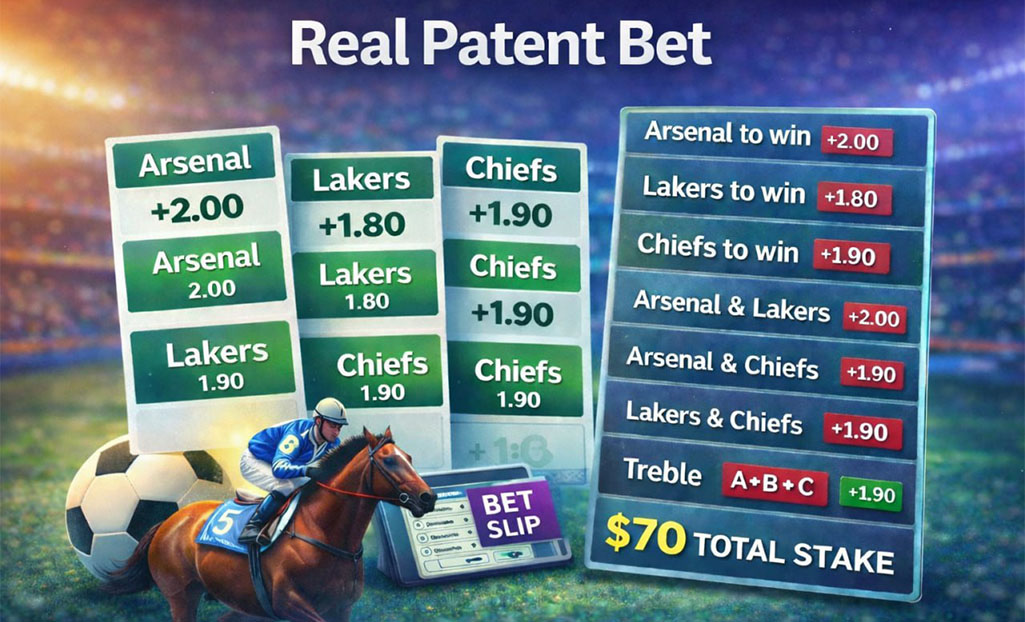
Patent bet example showing the seven-bet system with three selections.
Now that we’ve seen how the structure works, it’s easier to understand it with a real example.
Suppose you decide to stake $10 on each bet.
Since a Patent bet contains seven bets in total, the full stake would look like this:
7 bets × $10 = $70 total stake
So even though it starts with just three selections, the system spreads your stake across seven different combinations.
Your selections might look something like this:
| Selection | Odds |
|---|---|
| Arsenal to win | 2.00 |
| Lakers to win | 1.80 |
| Chiefs to win | 1.90 |
Now let’s see what happens depending on the results.
Scenario 1: Only One Pick Wins
Suppose only Arsenal wins.
The only winning bet is:
- Arsenal single
Even though the other picks lost, the Patent bet still returns something because singles are included.
With a traditional accumulator, the entire bet would have lost.
Scenario 2: Two Picks Win
Now imagine Arsenal and Lakers both win.
The winning bets would be:
- Arsenal single
- Lakers single
- Arsenal + Lakers double
Three bets win instead of one, which increases the return.
Scenario 3: All Three Picks Win
If all three selections win, every part of the Patent bet wins:
- 3 singles
- 3 doubles
- 1 treble
This produces the maximum payout.
The treble multiplies the odds of all three selections together, which is where the biggest potential return comes from.
How Patent Bet Winnings Are Calculated
The total payout from a Patent bet depends on three factors:
- The odds of each selection
- The stake placed on each bet
- How many selections win
Here’s a quick breakdown:
| Outcome | Winning Bets |
|---|---|
| 1 winning pick | 1 bet |
| 2 winning picks | 3 bets |
| 3 winning picks | 7 bets |
Because doubles and trebles multiply the odds together, the payout increases quickly when multiple selections win.
Why People Use Patent Bets
There are a few reasons this system shows up quite often on betting slips.
More chances to win
Since singles are included, even one correct pick can still produce a return.
Balanced risk
Instead of relying on one all-or-nothing accumulator, the stake is spread across several combinations.
Potential for bigger payouts
If two or all three selections win, the doubles and the treble start multiplying the odds, which can significantly increase the return.
That mix of extra coverage and solid payout potential is what makes this type of wager appealing in many betting situations.
Patent Bet vs Accumulator
It’s helpful to compare Patent bets with a standard accumulator.
| Feature | Patent Bet | Accumulator |
|---|---|---|
| Total bets | 7 | 1 |
| Can return with one winner | Yes | No |
| Total stake | Higher | Lower |
| Maximum payout | Moderate-High | Very High |
Accumulator bets require every selection to win, while Patent bets offer multiple paths to a return.
Things to Keep in Mind When Placing a Patent Bet
A few small details can make a big difference.
The total stake is higher
Since you’re placing seven bets, the total cost adds up quickly.
For example:
$5 per bet → $35 total
$10 per bet → $70 total
Odds matter
Selections with extremely low odds may not generate much profit, even when multiple picks win.
Selections should make sense together
If several picks depend on the same outcome or situation, the risk increases.
When a Patent Bet Makes Sense
This type of system usually comes into play when you have three selections you like, but you’d rather not put everything on a single all-or-nothing accumulator.
Instead of relying on one combined bet, the stake is spread across several combinations, which gives you a bit more breathing room if one pick doesn’t land.
You’ll often see this approach used in situations like:
- Weekend soccer betting
- Horse racing cards
- Multi-sport betting slips
- Parlays where someone wants a little extra protection
In many ways, it sits right in the middle between placing individual bets and going all in on a full accumulator.
As you can see, this system opens the door to experimenting with different combinations without relying on just one outcome. If you enjoy strategies that offer a bit more flexibility, it might be worth trying… are you ready to test it on your next bet slip?