Ante-Post Betting Explained for Racing & Football

You’ll often hear people say things like, "I should’ve backed them earlier."
The attraction is simple: getting bigger odds before the market moves.
If you want to understand how ante-post betting works and why it’s so popular in the UK, keep reading.
What Is Ante-Post Betting?
Ante-post betting is a long-term wager placed before the final market for an event is available.
You’ll mostly see these markets in:
- Football outright betting
- Horse racing festivals
- Tournament winners
- Seasonal awards
Instead of betting on a single match, you’re predicting a future outcome much earlier.
| Market | Early Odds | Later Odds |
|---|---|---|
| Arsenal to win Premier League | 10/1 | 3/1 |
That’s basically the idea behind ante-post betting:
Trying to spot value before the market changes.
One thing you notice quickly with these markets is how fast public opinion can shift. A few good performances, a winning streak, or even media hype can dramatically change the odds within weeks.
How Ante-Post Betting Works in Football
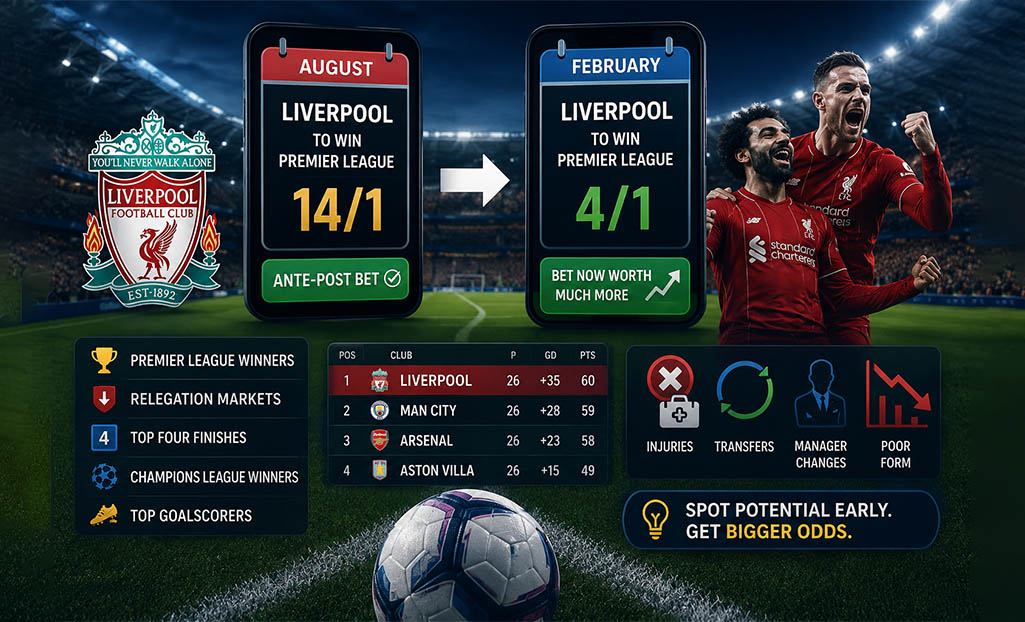
How football ante-post odds change over time
Football ante-post betting usually focuses on long-term outcomes rather than individual matches.
Common examples include:
- Premier League winners
- Relegation markets
- Top four finishes
- Champions League winners
- Top goalscorers
Imagine backing Liverpool to win the Premier League in August at 14/1.
By February, they’re sitting top of the table and the odds have dropped to 4/1.
Suddenly, your early bet looks far more valuable than bets being placed later in the season.
Of course, football seasons are unpredictable too. Injuries, transfers, manager changes, and poor form can completely change the picture within weeks.
Ante-Post Betting in Horse Racing
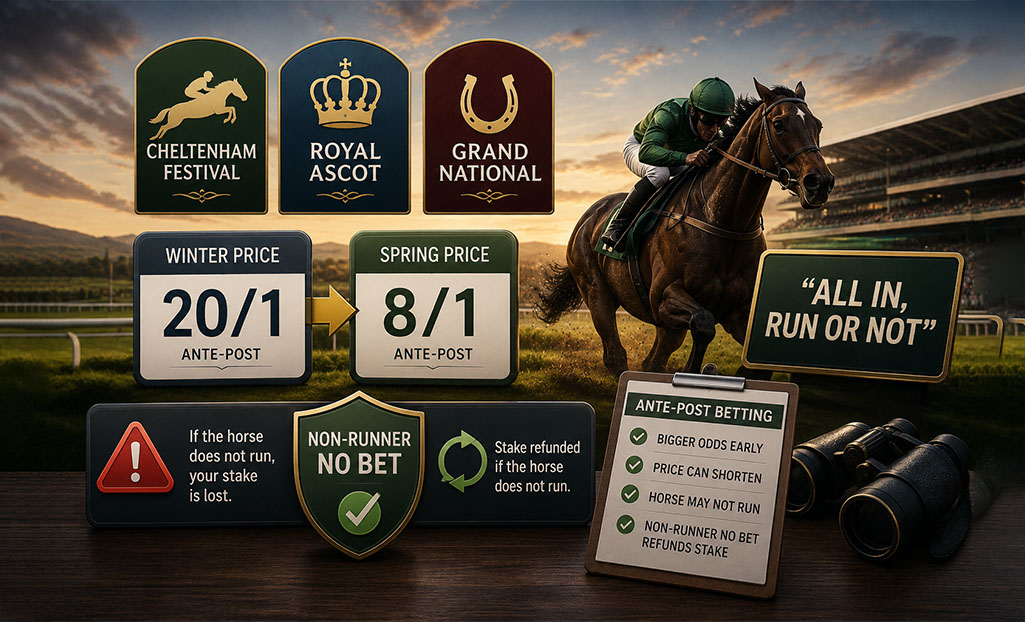
Ante-post betting markets before Cheltenham and Royal Ascot
Horse racing is where ante-post betting becomes even more popular in the UK.
Major events like:
- Cheltenham Festival
- Royal Ascot
- Grand National
- All attract huge ante-post markets months before race day.
A horse priced at 20/1 during winter could shorten dramatically before the festival begins after a few strong performances.
But racing also introduces one of the biggest risks in ante-post betting:
the horse may not run at all.
That’s where many bettors first hear the phrase:
"All In, Run or Not"
In standard ante-post markets, your stake is usually lost if the horse does not participate.
This catches plenty of people out, especially when they assume all bets work like regular race-day betting.
Some UK bookmakers like Bet365, Paddy Power, and William Hill offer:
Non-Runner No Bet
Why Ante-Post Odds Change
One interesting thing about ante-post betting is how quickly the market can move.
Odds constantly change because of:
- Injuries
- Transfers
- Team form
- Public betting activity
- Media attention
- Weather conditions in racing
Sometimes the early value disappears surprisingly fast once bookmakers react to new information.
That’s why timing matters so much in ante-post betting.
Ante-Post vs Regular Betting
| Regular Betting | Ante-Post Betting |
|---|---|
| Placed near event time | Placed weeks or months earlier |
| Lower uncertainty | Higher uncertainty |
| Smaller odds swings | Bigger odds swings |
| Short-term markets | Long-term predictions |
Quick Checklist Before Placing an Ante-Post Bet
Before placing an ante-post wager, it’s usually worth checking:
- Injury news
- Fixture difficulty
- Weather conditions
- Transfer rumours
- Bookmaker rules
- Whether the market is Non-Runner No Bet
Even small details can have a huge impact over a long season or festival campaign.
Conclusion
As you can see, ante-post betting isn’t just about chasing bigger odds.
Sometimes the early value is worth it. Other times, waiting can be the smarter move.
That’s what makes these long-term markets so interesting in football and horse racing — timing matters almost as much as the prediction itself.