Moneyline, Spreads and Totals: Understanding the Main Bet Types

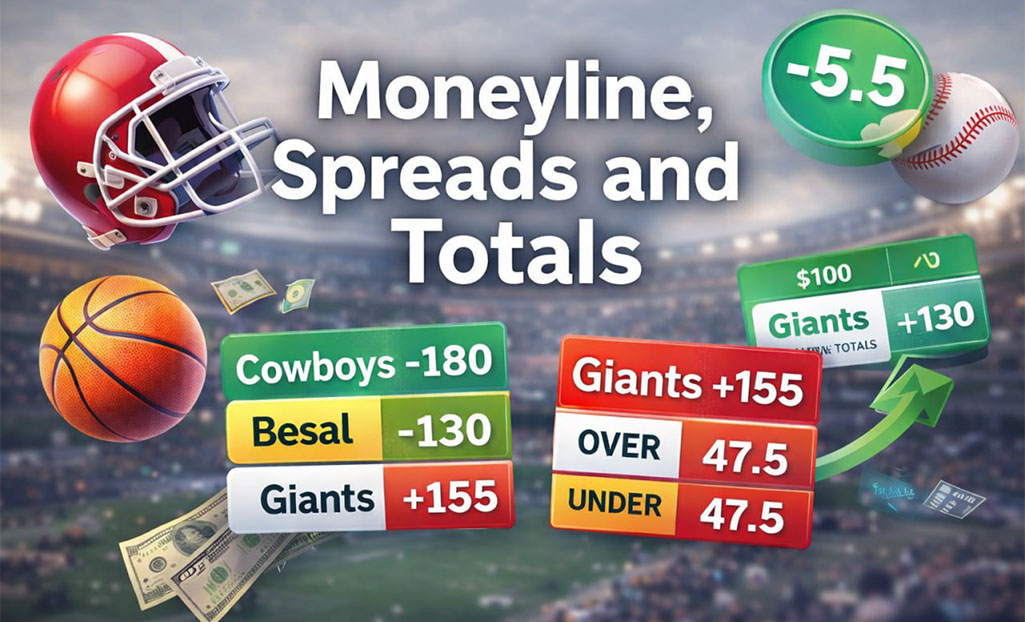
If you've ever looked at a sportsbook line, you've probably noticed the same three options appearing in almost every game: Moneyline, Spread and Totals.
And that’s not a coincidence. These three markets are essentially the backbone of sports betting, which means once you understand how Moneyline, Spread and Totals work, those numbers on the screen start to make a lot more sense.
After spending time looking at betting lines across different sports, you quickly realize that most wagers revolve around these same three markets.
So instead of just defining them, let’s break down Moneyline, Spread and Totals in a simple way and walk through real examples to see how each one actually plays out during a game.
The Three Core Sports Betting Markets
When you open a sportsbook page for a game, the first three options you usually see are these:
| Bet Type | What You’re Predicting | Typical Use |
|---|---|---|
| Moneyline | Which team wins the game | When you only care about the winner |
| Spread | Margin of victory | When teams are unevenly matched |
| Totals | Combined points scored | When focusing on game pace |
These three betting markets appear in almost every sport, including:
- NFL
- NBA
- MLB
- College football
- Soccer
- Hockey
Once you understand these, you’ll be able to interpret most betting lines you come across.
Moneyline Bets: Simply Picking the Winner

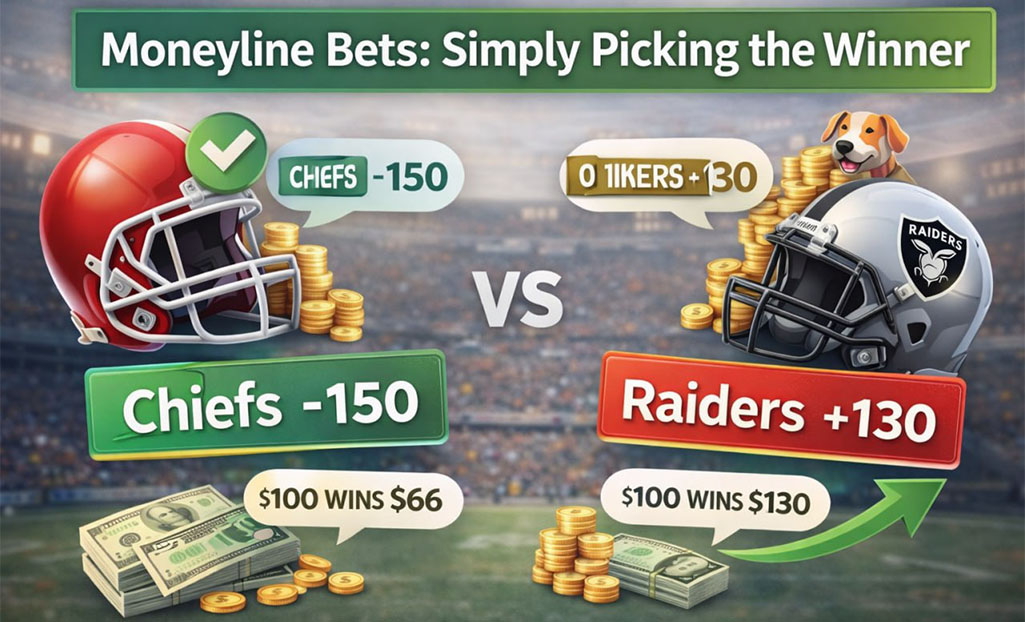
Example of a Moneyline bet where the Chiefs are the favorite (-150) and the Raiders are the underdog (+130)
Let’s start with the most straightforward option.
A Moneyline bet is exactly what it sounds like: you're choosing which team will win the game.
There’s no point difference or scoring requirement involved. The only thing that matters is who wins.
However, the payout changes depending on how likely a team is expected to win.
For example:
| Team | Moneyline Odds |
|---|---|
| Kansas City Chiefs | -150 |
| Las Vegas Raiders | +130 |
This tells us two things:
- The Chiefs are the favorite
- The Raiders are the underdog
If you bet $150 on the Chiefs, you would win $100 profit if they win.
If you bet $100 on the Raiders, you would win $130 profit if they win.
When Moneyline Bets Are Common
Moneyline betting shows up in every sport, but it’s especially popular in games where the score differences tend to be smaller.
For example:
- Baseball
- Hockey
- Close NFL matchups
In those cases, bettors often focus on which team wins, rather than worrying about point margins.
When Moneyline Bets Often Make Sense
Moneyline bets are commonly used in situations like these:
- When the matchup is expected to be close
- In sports where scoring margins are smaller (like baseball or hockey)
- When you believe an underdog has a realistic chance to win
Spread Betting: Balancing the Game
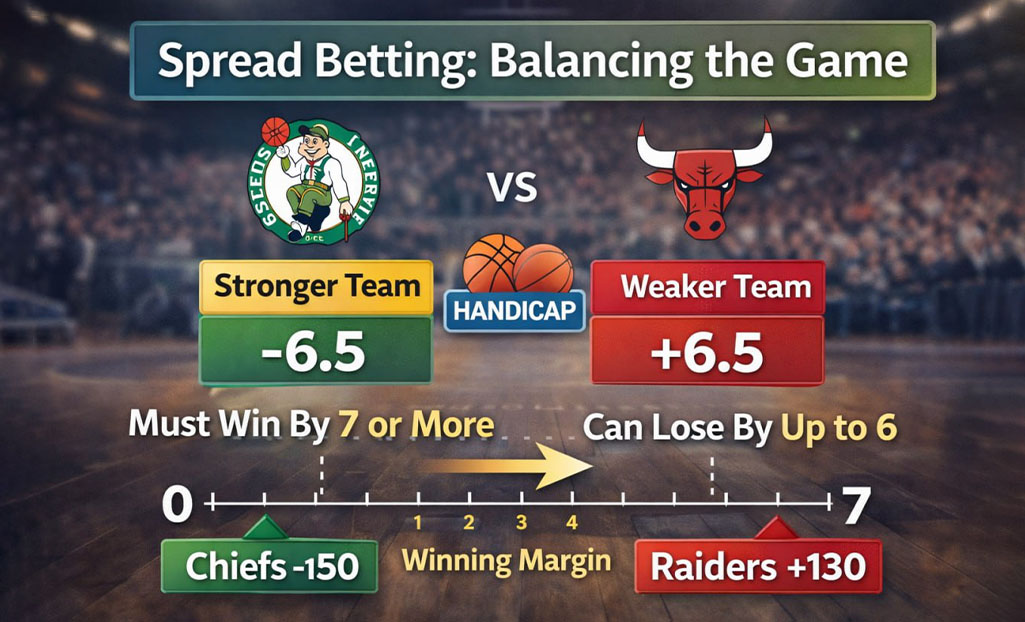
Point spread betting example showing how a -6.5 and +6.5 handicap works
Sometimes one team is clearly stronger than the other. If sportsbooks only offered Moneyline bets, almost everyone would choose the favorite.
That’s where the Point Spread comes in.
Spread betting introduces a handicap, giving the weaker team a head start while asking the stronger team to win by a certain margin.
Let’s look at an example.
Example Point Spread
| Team | Spread |
|---|---|
| Boston Celtics | -6.5 |
| Chicago Bulls | +6.5 |
What this means:
- The Celtics must win by 7 points or more
- The Bulls can lose by up to 6 points and the bet still wins
Real Game Scenario
Final score:
Celtics 110
Bulls 105
The Celtics won the game, but only by 5 points.
So in this case:
- Celtics did not cover the spread
- Bulls covered +6.5
Why Spreads Exist
Point spreads are designed to make games more balanced for betting purposes.
Instead of everyone picking the obvious favorite, spreads create a situation where both sides of the bet can attract action.
This is why spreads are extremely common in sports like:
- NFL
- NBA
- College football
When Spread Bets Are Often Used
Point spread betting is usually more relevant when:
- One team is clearly stronger than the other
- The favorite is expected to win comfortably
- The matchup may still be competitive even if the underdog loses
Here, the spread helps create a more balanced prediction about how the game might unfold.
Totals Betting: Predicting the Game Pace
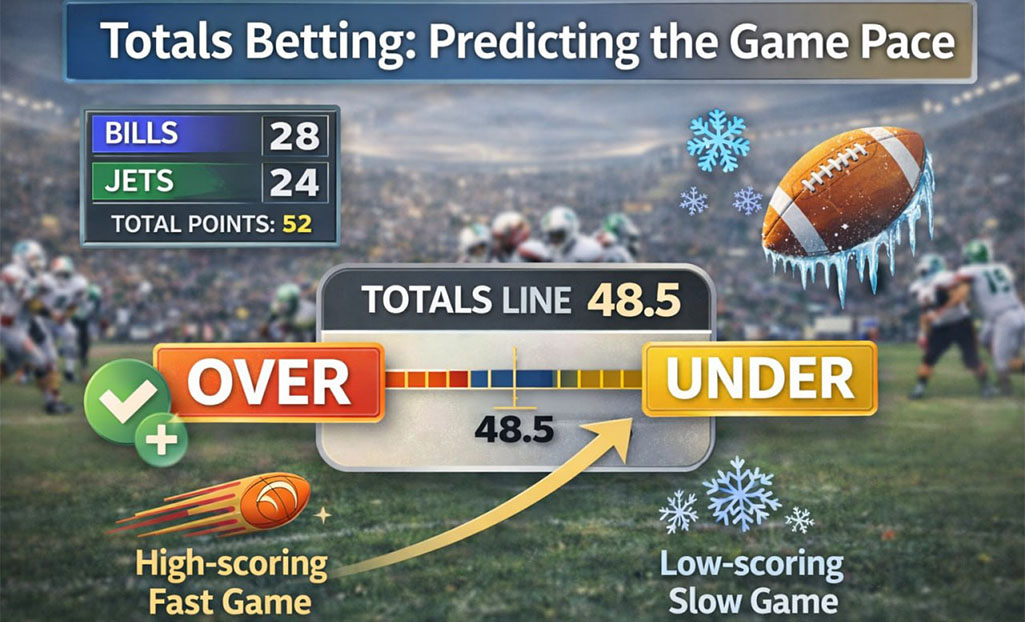
Totals betting example where bettors predict whether the combined score will go over or under the sportsbook line
The third major market is called Totals, also known as Over/Under betting.
Instead of betting on a team, you're predicting the combined score of both teams.
-
Example Totals Line
Game Total: 48.5 points
Your options are:
- Over 48.5
- Under 48.5
-
Example Result
Final score:
- Bills 28
- Jets 24
Total points = 52
That means:
- Over 48.5 - wins
- Under 48.5 - loses
Totals betting is popular when focusing on things like:
- Offensive strength
- Defensive matchups
- Weather conditions
- Game pace
When Totals Bets Are Often Considered
Totals betting often becomes interesting when looking at factors like:
- Fast-paced teams that tend to score frequently
- Strong defensive matchups that could limit scoring
- Weather conditions that might affect offensive performance
In these cases, the focus shifts away from the winner and toward how the game might develop overall.
Quick Comparison: Moneyline, Spread and Totals
Here’s a quick side-by-side look at how these betting types differ.
| Bet Type | What Matters Most |
|---|---|
| Moneyline | Which team wins |
| Spread | Margin of victory |
| Totals | Combined score |
Each one focuses on a different aspect of the game, which is why sportsbooks offer all three.
Seeing the Full Picture in a Betting Line
To see how all of this comes together, let’s imagine a simple NFL matchup.
Cowboys vs Giants
A sportsbook line for that game might look something like this:
| Market | Odds / Line |
|---|---|
| Moneyline (Winner) | Cowboys -180 / Giants +155 |
| Spread (Point Spread) | Cowboys -4.5 |
| Totals (Over/Under) | 46.5 points |
When you look at these three markets together, you’re essentially seeing three different ways of interpreting the same game.
- Moneyline focuses on which team wins
- Spread looks at how big the margin might be
- Totals estimates how many points the game could produce
Conclusion
As you can see, Moneyline, Spread and Totals are often the easiest way to get a quick feel for a matchup.
In just a few numbers, they can hint at:
- Which team has the edge
- Whether the game might stay close
- How active the scoreboard could be
Sometimes taking a moment to look at these three lines already tells you a lot.