Is Online Sports Betting Legal in the U.S.? State by State

Online sports betting is legal in many U.S. states, but illegal or restricted in others. Laws vary by state, and whether you can legally place a bet depends entirely on where you are physically located.
In this beginner-friendly guide, you’ll learn where online sports betting is legal in the U.S. in 2026, how state laws work, and what you should know before placing your first bet.
Quick Answer: Is Online Sports Betting Legal in the U.S.?
- Online sports betting is legal in over 30 U.S. states
- Each state sets its own rules and restrictions
- Your physical location determines legality
- Offshore sportsbooks are not regulated in the U.S.
If you are new to sports betting, understanding these basics is essential before signing up or betting real money.
👉 Want more details?
How Sports Betting Laws Work in the United States
Sports betting in the U.S. is regulated at the state level, not federally.
This means:
- Each state decides whether sports betting is legal
- States control licensing, taxes, and approved operators
- Rules can change from one state to another
There is no single nationwide sports betting law. Even if online betting is legal in one state, it may be completely illegal just across the border.
Online vs Retail Sports Betting: What’s the Difference?
Many beginners assume sports betting is either legal or illegal everywhere, but there’s an important distinction.
| Type | What It Means |
|---|---|
| Online sports betting | Betting through websites or mobile apps |
| Retail sports betting | In-person betting at casinos or racetracks |
Some states allow retail betting only, meaning you must place bets in person. Others allow both retail and online betting, which is far more convenient for most users.
U.S. Online Sports Betting Legal Status by State (2026)
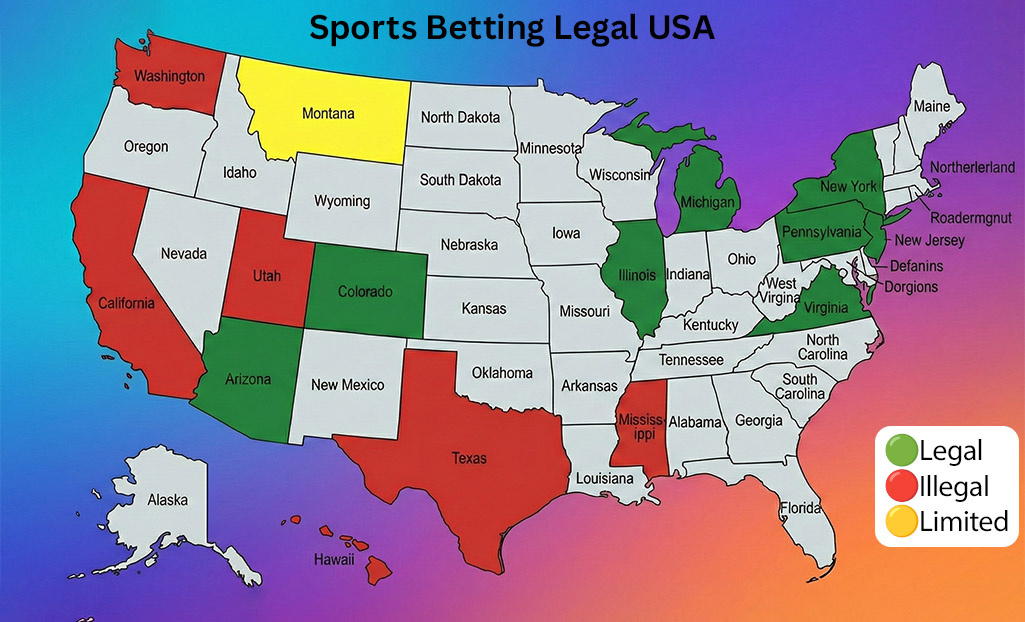
U.S. Online Sports Betting Legal Status by State
Below is a clear overview table showing where online sports betting is legal in the U.S. as of 2026.
Looking for Your State?
Jump directly to key states below:
New York | California | Texas | New Jersey | Pennsylvania
Online Sports Betting Laws by State
How Sportsbooks Know What State You’re In
Legal sportsbooks use geolocation technology to comply with state laws. This may include:
- GPS data (on mobile devices)
- Wi-Fi and Bluetooth signals
- IP address checks
Are Offshore Sportsbooks Legal in the U.S.?
Offshore sportsbooks operate outside the United States and are not licensed by U.S. states.
Important things to know:
- They are not regulated by U.S. law
- Consumer protections do not apply
- Payouts are not guaranteed
- Legal risk varies by state
Legal Age for Online Sports Betting
Most states require bettors to be:
- 21 years old
- Some states allow 18+
Want more details about age requirements?
See our complete guide to the legal age for sports betting.
Age requirements depend on state law, and sportsbooks will verify your identity before allowing withdrawals.
Is It Safe to Bet Online in Legal States?
When betting through licensed sportsbooks:
- Funds are protected
- Betting markets are audited
- Dispute resolution exists
- Personal data is secured
Frequently Asked Questions
Is online sports betting legal nationwide?
No. Sports betting laws vary by state, and there is no federal legalization.
Can I bet online while traveling?
Yes, but only if the state you are physically in allows online sports betting.
Can I use a VPN to bet online?
No. Licensed sportsbooks actively block VPN usage to comply with state laws.
Do I have to pay taxes on sports betting winnings?
Yes. In most states, sports betting winnings are considered taxable income.
What happens if I bet illegally?
Consequences vary by state and situation but may include lost funds or account closures.
Final Thoughts: What Beginners Should Do Next
Before placing any bets:
- Check your state’s legal status
- Use licensed sportsbooks only
- Learn basic betting concepts first
- Avoid unregulated offshore sites
If you’re just starting out, understanding legality is the first step toward betting responsibly.
Last updated: February 4, 2026