Future of Sports Betting Legislation in the U.S.
If you’ve been following sports betting over the past few years, you’ve probably noticed something: the rules are constantly changing.
Since the Supreme Court overturned the federal ban on sports betting in 2018, each state has been able to decide its own laws. The result is a fast-evolving legal landscape where some states fully embrace sports betting, others restrict it, and a few are still debating whether to allow it at all.
Because of this, the future of sports betting legislation in the United States is still being shaped. New bills, negotiations, and regulatory changes appear every year, and they can quickly transform how betting works across the country.
Let’s take a look at the biggest trends shaping where sports betting laws may be heading next.
Why Sports Betting Laws Keep Changing
Unlike many industries that follow a single federal framework, sports betting is largely regulated at the state level.
This means every state can create its own system:
- Some allow both online and retail sportsbooks
- Others only permit betting inside casinos
- A few states still prohibit sports betting completely
Because of these differences, lawmakers often revisit legislation to adjust taxes, licensing rules, or betting formats.
As technology evolves and more states enter the market, legislators continue to rethink how sports betting should be regulated.
States That Could Legalize Sports Betting Next
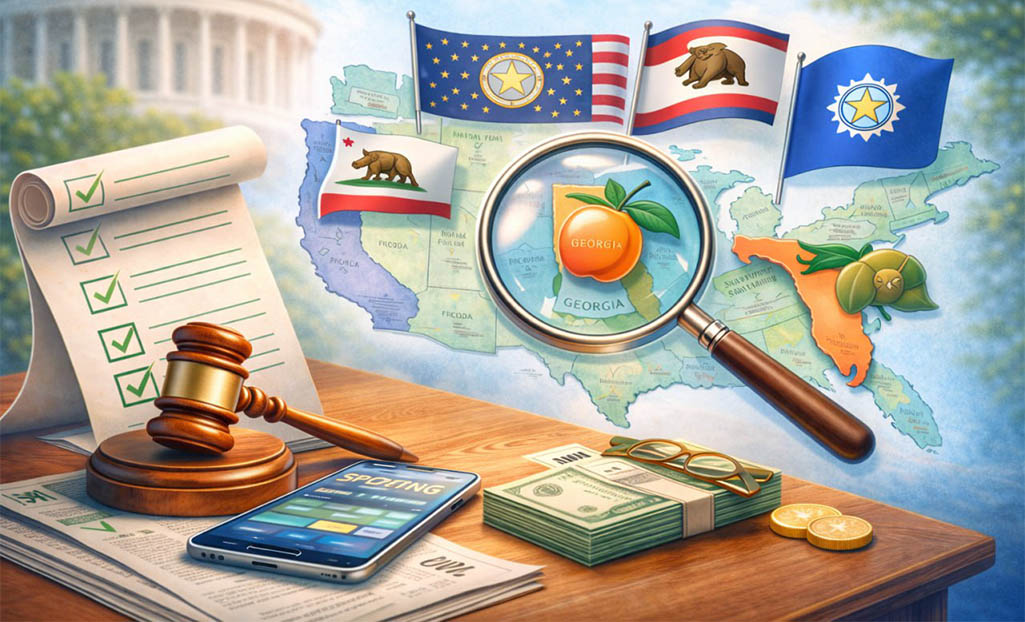
Even though sports betting is already legal in much of the country, several major markets remain undecided.
One of the most talked-about examples is California.
As the most populous state in the U.S., California could become one of the largest sports betting markets in the world if legislation eventually passes. Previous ballot initiatives failed in 2022, but negotiations between tribal operators, lawmakers, and sportsbooks are ongoing. Many analysts believe new proposals could return to voters in the coming years.
Another state frequently mentioned in legislative discussions is Georgia, where lawmakers continue debating whether sports betting should be approved through legislation or a constitutional amendment.
Meanwhile, Minnesota has seen multiple sports betting bills introduced, although disagreements between tribal gaming operators and commercial sportsbooks have slowed progress.
If even one or two of these states approve new laws, the overall sports betting market could expand significantly.
Tracking Recent Legislative Developments
Because sports betting laws are constantly evolving, it helps to keep an eye on some of the states where legislation is actively developing.
For example, Florida has already gone through a complex legal process. Sports betting now operates through an agreement between the state and the Seminole Tribe, with the Hard Rock betting platform relaunching online betting in late 2023 after several court battles.
At the same time, debates continue about whether the Florida market could expand beyond the current tribal framework in the future.
Are Sports Betting Legal in the United States?
In California, discussions between tribal groups and sportsbook operators continue behind the scenes after voters rejected ballot initiatives in 2022. Many industry observers expect the issue to return to the ballot in the coming years.
States like Georgia and Minnesota also remain under close watch, as lawmakers periodically introduce new bills that could eventually lead to legalization.
Because each state controls its own regulatory system, a single legislative session can dramatically change the sports betting map in the United States.
Current Sports Betting Legislative Watchlist
To better understand where things stand right now, here’s a quick snapshot of some key states frequently mentioned in discussions about sports betting legislation.
| State | Current Status | Latest Legislative Situation |
|---|---|---|
| California | Not legal | Negotiations between tribes and sportsbooks continue after failed 2022 ballot initiatives |
| Florida | Legal via Seminole Tribe | Hard Rock Bet relaunched in 2023 after legal challenges |
| Georgia | Pending | Lawmakers debating legalization and possible referendum |
| Minnesota | Pending | Multiple sports betting bills introduced but stalled |
This type of situation shows why sports betting legislation remains such a dynamic topic. A single bill, court ruling, or voter initiative can quickly change the regulatory landscape.
The Growing Role of Online and Mobile Betting
One of the clearest trends in sports betting legislation is the shift toward mobile wagering.
In the early days after legalization, many states limited betting to physical sportsbooks located inside casinos. Over time, however, lawmakers realized that mobile platforms make betting far more accessible and generate more tax revenue.
That’s why newer markets often launch with strong mobile support.
For example, North Carolina introduced statewide mobile sports betting in 2024, allowing residents to place bets through licensed apps anywhere within state borders.
At the same time, some states still prefer a more cautious approach. Places like Mississippi continue to focus mainly on casino-based sportsbooks, with limited mobile options.
These differences highlight one of the key debates regulators face today: how to balance accessibility with responsible oversight.
New Legal Gray Areas: Prediction Markets
Another interesting development is the emergence of prediction markets.
These platforms allow users to trade contracts based on the outcome of events. In some cases, the events resemble sports wagers.
Because prediction markets are sometimes regulated as financial products rather than gambling platforms, they can operate under a completely different legal framework.
That has raised questions among state regulators who argue that certain prediction markets look very similar to sportsbooks.
Several legal challenges are already underway, and future court decisions could determine how these platforms are regulated in the U.S.
More Focus on Responsible Gambling
As sports betting continues to grow, lawmakers are also paying more attention to consumer protection.
Recent legislative proposals in multiple states have included measures such as:
- Stricter identity verification
- Clearer advertising rules
- Responsible gambling tools inside betting apps
- Voluntary self-exclusion programs
Some regulators are also exploring how technology, including data monitoring and artificial intelligence, could help identify risky betting behavior earlier.
The goal is to ensure that the expansion of sports betting happens alongside stronger protections for players.
What the Future of Sports Betting Legislation May Look Like
While it’s impossible to predict every legal change, several trends appear likely to shape the next phase of sports betting in the United States.
First, more states will probably consider legalization as they observe the tax revenue generated elsewhere.
Second, regulations may gradually become more standardized as lawmakers learn from existing markets.
And third, new technologies—such as micro-betting, live wagering innovations, and prediction markets—will likely push regulators to update current laws.
In other words, sports betting legislation isn’t static. It’s an evolving framework that continues to adapt as the industry grows.
For anyone interested in sports betting, keeping an eye on these legal developments can offer valuable insight into where the industry may be heading next.