Arbitrage Betting Strategies: Hedging Bets & Avoiding Limits

Most bettors try to predict winners.
Arbitrage bettors look for pricing mistakes instead.
That’s what makes this strategy so interesting in UK betting markets. Rather than relying only on match predictions, the idea is to take advantage of odds differences between bookmakers and potentially secure a return regardless of the final result.
Sounds simple enough, right?
Well, not exactly.
What Is Arbitrage Betting?
Arbitrage betting, often called "arbing" or "sure betting", is a strategy where bets are placed on different outcomes of the same event using multiple bookmakers.
The idea is simple: find odds discrepancies large enough to create a potential return after all bets are placed.
Here’s a quick football example:
| Outcome | Bookmaker | Odds |
|---|---|---|
| Arsenal Win | Bet365 | 2.25 |
| Draw | William Hill | 3.70 |
| Chelsea Win | Unibet | 4.40 |
If the stakes are calculated correctly, the combined return becomes slightly higher than the total amount risked.
How Bettors Find Arbitrage Opportunities

Comparing live bookmaker odds to spot arbitrage betting opportunities in UK markets.
Arbitrage opportunities usually appear when bookmakers react differently to market movement.
That small gap can create an opportunity.
Comparing Multiple Bookmakers
Many bettors manually compare odds across UK sportsbooks such as:
- Bet365
- Paddy Power
- William Hill
- Coral
- Betfred
- Unibet
Even small differences in pricing can sometimes create profitable setups when combined correctly.
Watching Live Betting Markets
Live betting markets are one of the biggest sources of arbitrage opportunities.
Odds can change quickly during:
- Goals
- Red cards
- Injuries
- Momentum swings
- Late-game pressure
Sometimes one bookmaker reacts slower than another, especially during fast football matches or tennis events.
Using Odds Comparison Tools
Many people also rely on arbitrage scanners or odds comparison tools that automatically track pricing differences between bookmakers and betting exchanges.
It definitely makes the process faster. The only problem is that opportunities can disappear within seconds, especially in popular UK football markets where odds move constantly.
Looking at Smaller Markets
Premier League odds are heavily monitored, but smaller competitions can sometimes contain softer pricing.
That may include:
- Lower football divisions
- Player props
- Smaller tennis tournaments
- Less popular live markets
Of course, lower liquidity can also increase the risk of odds changing before every bet is placed.
Step-by-Step Arbitrage Betting Example
Let’s imagine these odds appear before a Premier League match:
| Outcome | Bookmaker | Odds |
|---|---|---|
| Tottenham Win | Bet365 | 2.30 |
| Draw | Betfred | 3.75 |
| Aston Villa Win | Unibet | 4.30 |
A bettor using a £100 bankroll might:
- Compare odds across several bookmakers
- Check if the implied probability falls below 100%
- Split stakes across all outcomes
- Place bets quickly before prices move
- Double-check calculations before confirming bets
If everything lines up correctly, the total return could end up slightly higher than the total stake regardless of the final result.
That’s the core idea behind arbitrage betting.
How Hedging Fits Into Arbitrage Betting
Hedging is closely linked to arbitrage betting because both strategies focus on reducing risk rather than chasing massive payouts.
A hedge bet is basically a second wager used to protect an existing position.
Instead of letting the original bet fully ride, some bettors place another wager on Manchester City or the draw to lock in part of the profit regardless of the result.
This approach is common in:
- Football outrights
- Live betting
- Accumulator management
- Betting exchanges
A lot of bettors see hedging as a more flexible version of arbitrage betting rather than trying to secure guaranteed profit from every market.
Why Bookmakers Limit Arbitrage Bettors
This is probably the biggest concern surrounding arbitrage betting in the UK.
The strategy itself is legal, but bookmakers usually prefer casual betting behaviour instead of highly calculated betting patterns.
Accounts may attract attention faster when bettors:
- Only target arbitrage opportunities
- Consistently beat market prices
- Place unusually precise stake amounts
- Focus heavily on niche markets
- Withdraw profits too frequently
- Repeatedly beat closing line odds
From the bookmaker’s perspective, that type of activity can look more like professional trading than recreational betting.
Under UK regulations, sportsbooks licensed by the UK Gambling Commission are still allowed to limit stakes or restrict accounts according to their own terms and conditions.
Practical Ways Bettors Try To Avoid Limits
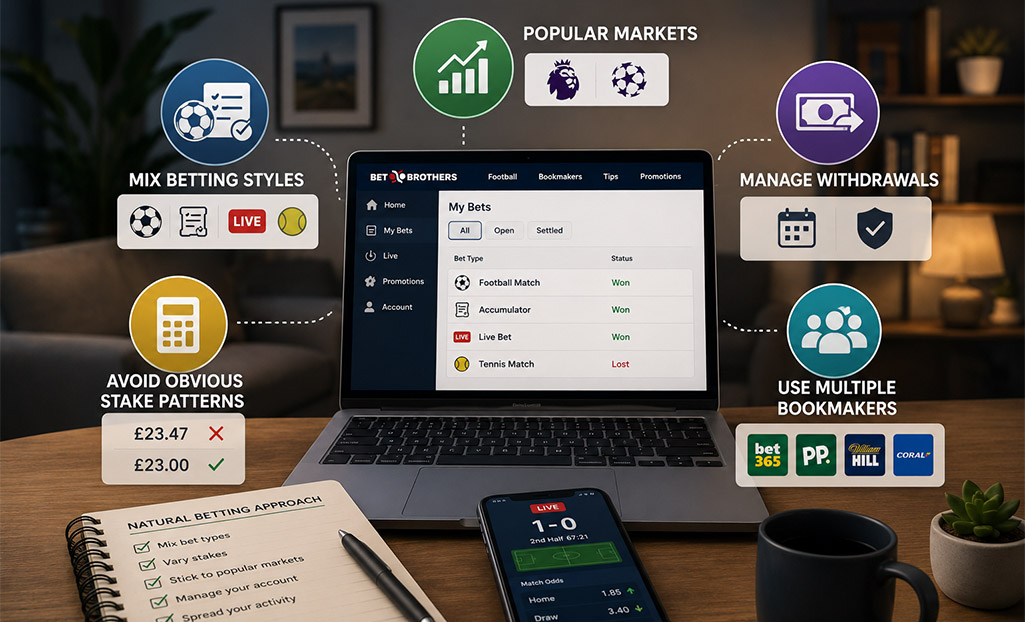
Strategies bettors use to keep betting activity balanced and reduce the risk of account restrictions.
There’s no guaranteed method to avoid bookmaker restrictions completely, but many bettors try to make their activity appear more natural over time.
Mixing Betting Styles
Some bettors combine arbitrage betting with:
- Standard football bets
- Weekend accumulators
- Live bets
- Mainstream markets
The idea is to avoid creating a betting history focused entirely on low-risk profit strategies.
Avoiding Obvious Stake Patterns
As mentioned earlier, highly calculated stake amounts can stand out surprisingly fast.
Instead of always using mathematically perfect numbers, many bettors slightly round their stakes to make betting activity look more natural and less automated.
Focusing on Popular UK Markets
Premier League and Champions League markets usually attract higher betting volume, which can make betting activity blend in more naturally compared to smaller niche events.
Managing Withdrawals Carefully
Frequent withdrawals immediately after profitable bets may attract additional attention on some platforms.
In this case, it’s usually better to keep more balanced account activity instead of constantly withdrawing funds after every successful run.
Using Multiple Bookmakers
Spreading activity across several sportsbooks reduces dependency on a single account while also creating more opportunities to compare odds.
Is Arbitrage Betting Worth It?
That really depends on expectations.
Still, many bettors enjoy the strategic side of it.
Compared to higher-risk betting styles, arbitrage and hedging focus more on:
- Discipline
- Bankroll management
- Market timing
- Odds analysis
- Risk control
And honestly, it doesn’t take long to realise that sports betting is often just as much about market movement and timing as it is about predicting winners.
Conclusion
As you can see, arbitrage betting is all about details. A small odds difference, a quick market reaction, or even the way bets are placed can completely change the outcome.
That’s probably why so many UK bettors find this strategy fascinating. But the real question is: could you spot the right opportunity before the market changes?